PCI DSS Compliance in Call Centers: How Outsourced Teams Handle Payment Data Securely
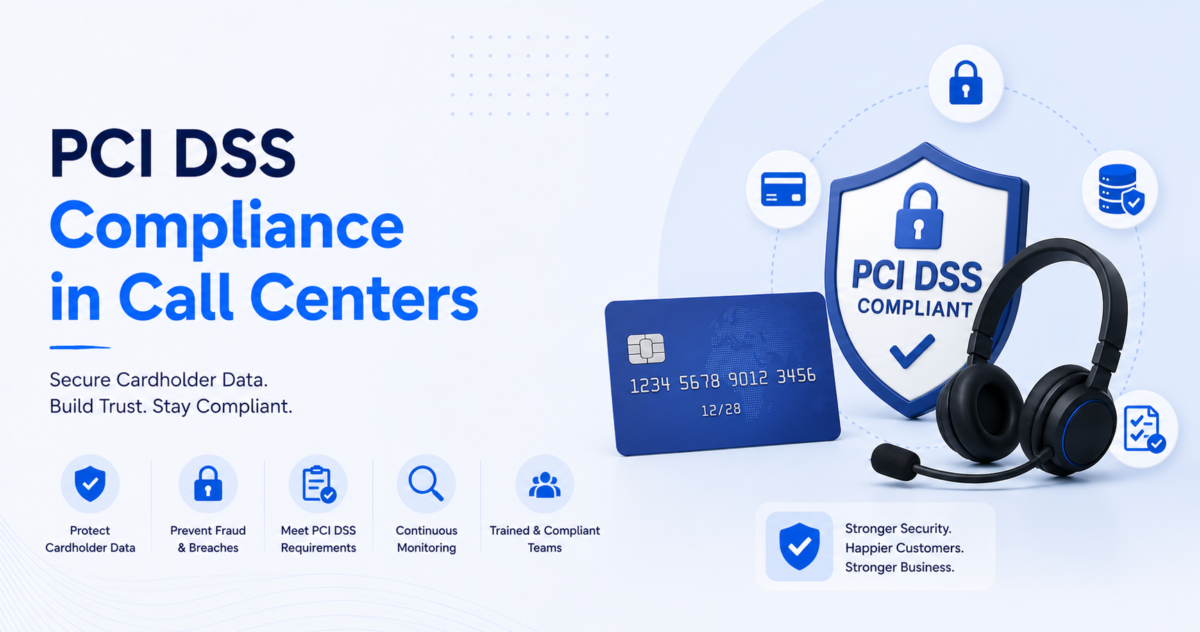
PCI DSS compliance in a call center means meeting the Payment Card Industry Data Security Standard whenever agents take, process, or store customer card payments over the phone. The standard applies to any organization that handles cardholder data — there is no exemption for telephone or outsourced channels. For call centers, compliance comes down to a combination of technical controls (encryption, tokenization, access restrictions, secure or paused call recording) and operational discipline (agent training, monitoring, and reducing how much card data ever enters the environment). This guide explains what PCI DSS requires of a call center, how outsourced teams handle payment data securely, the current version of the standard, and how to verify a provider’s compliance.
Key Takeaways
- PCI DSS applies to phone payments. The moment a customer reads a card number aloud, the agent’s headset, desktop, call recording, and network are all in scope.
- A signed contract alone isn’t enough — a compliant call center needs encryption, tokenization, strict access controls, and secure handling of call recordings.
- The most effective strategy is reducing scope: keeping raw card data out of the agent and recording environment entirely using technologies like DTMF masking and tokenization.
- The current standard is PCI DSS v4.0.1, and its previously “future-dated” requirements became mandatory on March 31, 2025.
- When choosing an outsourced partner, verify compliance with evidence (an Attestation of Compliance) rather than accepting a general claim.
What Is PCI DSS, and Why Does It Apply to Call Centers?
PCI DSS (the Payment Card Industry Data Security Standard) is a global security standard created by the major card brands — Visa, Mastercard, American Express, Discover, and JCB — and maintained by the PCI Security Standards Council. It sets baseline technical and operational requirements to protect cardholder data wherever it is stored, processed, or transmitted, with the goal of reducing payment fraud and data breaches.
Crucially, the standard applies to any entity that handles cardholder data, and there is no carve-out for telephone channels or for work that is outsourced. If your contact center processes, stores, or transmits credit card information — even if an agent only reads the number into a payment gateway once and never writes it down — that activity is in scope. So is everything it touches: the agent’s workstation, headset, any call recording, screen-share sessions, and the networks the data crosses. This is the part most teams underestimate.
The 12 PCI DSS Requirements at a Glance
PCI DSS is organized into 12 core requirements grouped under six broad goals. Understanding them helps clarify what a compliant call center must actually do:
- Build and maintain a secure network and systems — install and maintain network security controls (firewalls); don’t use vendor-supplied defaults for passwords and settings.
- Protect cardholder data — protect stored account data; encrypt cardholder data transmitted across open or public networks.
- Maintain a vulnerability management program — protect systems against malware; develop and maintain secure systems and software.
- Implement strong access control measures — restrict access to data on a need-to-know basis; assign unique IDs to each user with access; restrict physical access to cardholder data.
- Regularly monitor and test networks — log and monitor all access to system components and cardholder data; test security systems and processes regularly.
- Maintain an information security policy — keep a documented, regularly reviewed security policy that addresses information security for all personnel.
How Outsourced Call Centers Handle Payment Data Securely
A well-run outsourced call center protects payment data through a layered set of controls. The strongest approach combines technical safeguards with the principle of minimizing how much card data ever enters the environment in the first place:
- Descope wherever possible. The most effective control is keeping raw card data out of the agent’s reach entirely. Technologies like DTMF masking (where the customer types their card number on their phone keypad and the tones are suppressed so the agent never sees or hears it) and “pay-by-link” methods mean cardholder data never enters the agent desktop or call recording, dramatically shrinking PCI scope.
- Tokenization and encryption. Card data is replaced with a non-sensitive token and encrypted in transit and at rest, so usable card numbers are never stored in the contact center.
- Secure call recording. Recordings must not capture full card numbers or sensitive authentication data. Compliant centers use pause-and-resume recording or, better, masking that removes the need to pause at all.
- Strict, role-based access controls. Only authorized agents can access payment functions, every user has a unique ID, and all access is logged and reviewable.
- Network segmentation and monitoring. The cardholder data environment is isolated from the rest of the network and continuously monitored for threats.
- Agent training and clean-desk policies. Agents are trained never to write down or repeat card numbers, and physical controls prevent capture of card data (no pens, paper, or personal devices at the desk).
The Current Standard: PCI DSS v4.0.1 (2026)
If you’re evaluating call center compliance in 2026, the version that matters is PCI DSS v4.0.1. According to the PCI Security Standards Council, v4.0.1 became the only active version of the standard after December 31, 2024 — it was a limited revision of v4.0 that corrected errors and clarified intent without adding or removing requirements.
The more important milestone for buyers: the 51 “future-dated” requirements introduced in v4.0 became mandatory on March 31, 2025. These strengthened controls around areas like multi-factor authentication, anti-phishing, and e-commerce script monitoring. The practical implication is that a provider who validated compliance in 2024 but treated those requirements as optional would fail a current assessment. When you evaluate a partner, confirm they are assessed against v4.0.1 with all current requirements in force — not an outdated version.
Understanding PCI DSS Compliance Levels
PCI DSS sorts organizations into four levels based on annual card-transaction volume, which determine how compliance must be validated:
- Level 1 — the highest volume (typically over 6 million transactions a year), requiring an annual on-site assessment by a Qualified Security Assessor (QSA) and a Report on Compliance. Large service providers, including major outsourced call centers handling payments at scale, generally fall here.
- Levels 2–4 — lower volumes, typically validated through a Self-Assessment Questionnaire (SAQ) and, where applicable, network scans.
An important nuance: the level only changes how compliance is validated, not whether it’s required. Every organization that handles card data must meet the full standard regardless of level. When a large outsourced provider holds Level 1 Service Provider status, it signals the most rigorous, independently audited tier of validation.
How to Verify a Call Center’s PCI DSS Compliance
Many providers claim PCI compliance; the ones you can trust will prove it. During evaluation, ask the partner to demonstrate the following:
- Can you provide a current Attestation of Compliance (AOC), and which version and level were you assessed against?
- Who performed the assessment (an independent QSA), and when does it expire?
- How do you keep card data out of scope — do you use DTMF masking, tokenization, or pay-by-link?
- How are call recordings handled so they never capture card numbers?
- How is access to payment functions restricted, logged, and monitored?
- What is your incident-response and breach-notification process?
- Do you bundle other relevant certifications, such as ISO 27001?
Vague answers, an inability to produce a current AOC, or reliance on an outdated standard version are clear warning signs. A genuine partner is transparent and can show exactly how cardholder data is protected at every touchpoint.
Why PCI DSS Compliance Matters Beyond Avoiding Fines
Non-compliance carries real penalties — fines, higher transaction fees, and potential loss of the ability to process card payments — but the bigger stakes are breach cost and customer trust. Call centers that handle high transaction volumes are attractive targets, and a single breach can be financially and reputationally devastating. Demonstrating PCI DSS compliance signals to customers that their payment data is protected at every step, which is increasingly a prerequisite for doing business rather than a nice-to-have.
How Octopus Tech Approaches Payment-Related Support
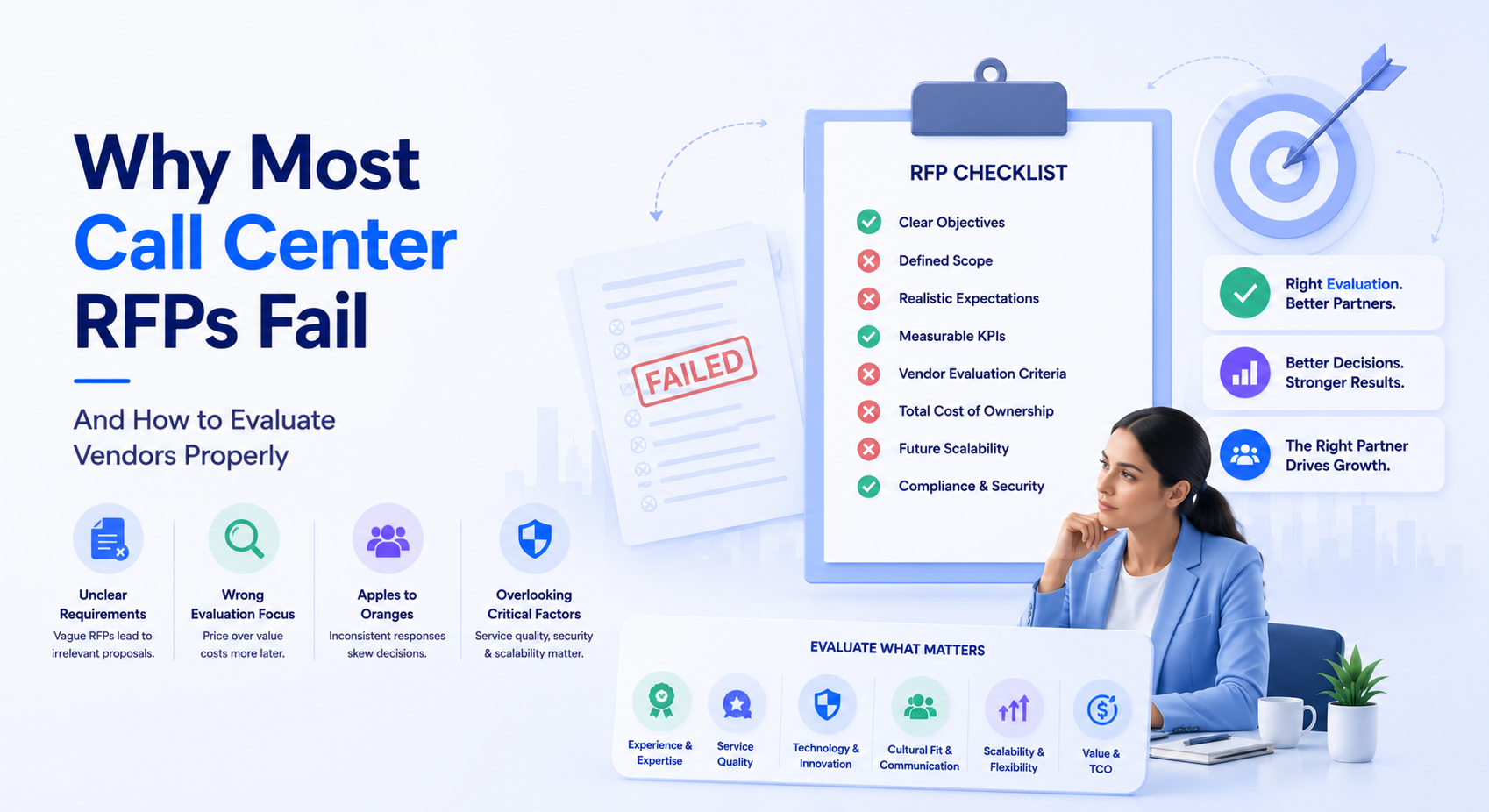
Octopus Tech has delivered outsourced voice and non-voice support from India since 2011, including for sectors where secure handling of customer and payment-adjacent information matters — such as e-commerce, fintech, and NBFC support. Secure data handling, trained agents, and documented processes are central to any engagement that touches sensitive customer information. If you’re evaluating partners for payment-related support, our guide on how to choose a call center outsourcing partner walks through the full vendor-evaluation process, including which security questions to ask.
Frequently Asked Questions
Does PCI DSS apply to phone payments and call centers?
Yes. PCI DSS applies to any organization that stores, processes, or transmits cardholder data, and there is no exemption for telephone payments. As soon as a customer provides a card number over the phone, the agent’s workstation, headset, call recording, and network all fall within PCI scope.
What is the best way for a call center to reduce PCI scope?
The most effective approach is keeping raw card data out of the agent environment entirely. Technologies such as DTMF masking (where the customer keys in the card number and the tones are suppressed) and pay-by-link methods mean cardholder data never reaches the agent’s screen or the call recording, which dramatically reduces the systems in scope and the cost of compliance.
What is the current version of PCI DSS in 2026?
The current version is PCI DSS v4.0.1, which became the only active version after December 31, 2024. The previously “future-dated” requirements from v4.0 became mandatory on March 31, 2025, so any current assessment must validate against the full v4.0.1 requirement set.
How do PCI-compliant call centers handle call recording?
Compliant call centers ensure recordings never capture full card numbers or sensitive authentication data. They achieve this through pause-and-resume recording during the payment step, or more reliably through masking technologies that suppress card data so recording can continue uninterrupted without capturing protected information.
What are the PCI DSS compliance levels?
PCI DSS defines four levels based on annual transaction volume. Level 1 is the highest volume and requires an annual independent assessment by a Qualified Security Assessor; Levels 2 through 4 typically validate through a Self-Assessment Questionnaire. The level only affects how compliance is validated — full compliance with the standard is required at every level.
How do I verify that an outsourced call center is PCI DSS compliant?
Ask for a current Attestation of Compliance (AOC), confirm the version and level it was assessed against, verify the assessment was performed by an independent QSA, and ask specifically how the provider keeps card data out of scope through masking, tokenization, and secure recording. Evidence, not a general claim, is what confirms compliance.
What happens if a call center is not PCI DSS compliant?
Non-compliance can lead to fines, increased transaction fees, and potentially losing the ability to accept card payments. More significantly, it raises the risk of a data breach, which carries severe financial and reputational consequences and can erode customer trust permanently.
Handling Payment Data Securely Through Outsourcing
PCI DSS compliance is non-negotiable for any call center that touches card payments — and entirely achievable through the right combination of scope reduction, technical controls, and trained agents. The smartest strategy is to keep raw card data out of the agent environment in the first place, layer in encryption, tokenization, strict access controls, and secure recording, and validate everything against the current PCI DSS v4.0.1 standard. When outsourcing, insist on evidence of compliance rather than assurances.
Octopus Tech provides outsourced customer and back-office support from India across e-commerce, fintech, and NBFC sectors. If you’re exploring secure, cost-effective support for payment-related processes, get in touch for a no-obligation conversation about your requirements and security needs.