Nearshore vs Offshore vs Onshore Call Centers: Which Model Fits Your Business?
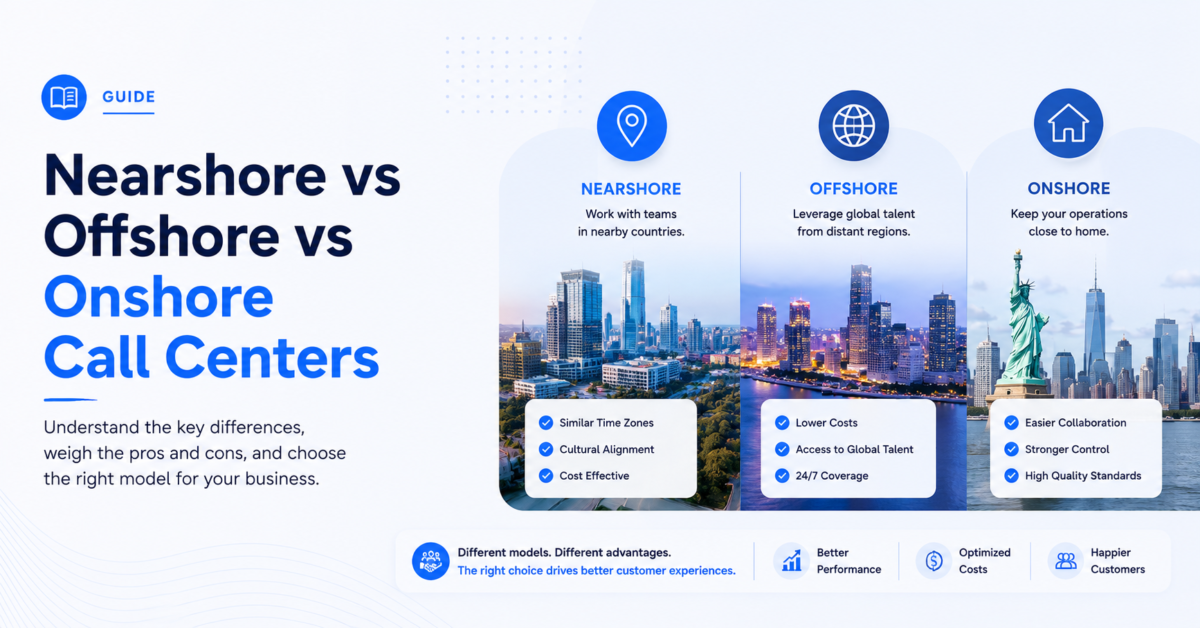
The difference between onshore, nearshore, and offshore call centers comes down to geographic distance from your customers — and the trade-offs that distance creates between cost, time-zone overlap, language, and talent supply. Onshore means a provider in your own country (highest cost, simplest control). Nearshore means a provider in a nearby country one to three time zones away (a middle ground on cost and collaboration). Offshore means a provider in a distant country such as India or the Philippines, typically 8 to 12 time zones away (the lowest per-hour cost and the largest, most established talent pools). There is no universally “best” model — the right choice depends on whether your priority is cost, real-time collaboration, scale, or regulatory simplicity. This guide breaks down all three so you can match the model to the work.
Key Takeaways
- The three models differ mainly by distance: onshore (same country), nearshore (nearby country), offshore (distant country).
- Offshore destinations like India offer the lowest rates and the deepest talent pools, making them ideal for scale, 24/7 coverage, and non-voice and voice work alike.
- Nearshore trades some cost savings for closer time-zone overlap; onshore trades the most cost for maximum control and the simplest compliance.
- The lowest hourly rate is not always the lowest total cost — factor in attrition, rework, and management overhead before deciding.
- Many businesses use a hybrid model, matching each function (voice, back-office, escalations) to the location that serves it best.
Quick Definitions
These terms are relative to where your company is based. The definitions below assume a company headquartered in a high-cost market such as the US, UK, or Australia, since that is the most common context for the comparison.
Onshore outsourcing means hiring a third-party provider within your own country. Agents share your language, culture, and time zone, and operate under the same legal framework. It is the most expensive model but offers the most direct control and the fewest communication barriers.
Nearshore outsourcing means hiring a provider in a neighbouring country or nearby region, usually within one to three time zones. For US companies, that means the Caribbean, Mexico, or Latin America; for UK companies, it often means Eastern Europe or South Africa. Nearshore offers cost savings over onshore while preserving time-zone overlap.
Offshore outsourcing means hiring a provider in a distant country, often 6 to 12 time zones away. The most established offshore destinations are India and the Philippines. Offshore typically offers the lowest per-hour rates, the largest talent pools, and the easiest path to round-the-clock coverage.
The Full Comparison
The table below compares all three models across the factors that most influence outsourcing outcomes. These are industry-typical ranges; individual providers within any model vary.
| Factor | Onshore (e.g., US/UK) | Nearshore (e.g., Caribbean / LatAm / E. Europe) | Offshore (e.g., India / Philippines) |
| Typical hourly cost | $22–$45/hr | $10–$18/hr | $6–$14/hr |
| Time-zone overlap | Full | 0–3 hours | 8–13 hours (or follow-the-sun) |
| English proficiency | Native | Native to strong | Strong; India has a vast English-speaking workforce |
| Talent pool size | Limited by local labour market | Moderate, growing | Very large and deep |
| 24/7 / follow-the-sun coverage | Hard and costly | Partial | Natural strength |
| Cultural alignment | Highest | High to moderate | Moderate; improved by training |
| Quality oversight | Simplest | Real-time possible | Requires process and tooling |
| Compliance | Same legal framework | Familiar; data rules vary | Different legal system; data agreements needed |
| Best for | Regulated, complex, low-volume work | Voice work needing time-zone overlap | Scale, cost efficiency, 24/7, voice and non-voice |
The pattern is consistent: offshore wins on cost and scale, onshore wins on control and compliance simplicity, and nearshore sits in between. Which advantage matters most is what determines your choice.
Onshore Call Centers: Strengths and Trade-offs
Onshore is the simplest model because the provider sits in your own country, shares your language and business hours, and operates under the same regulatory framework. Escalations, meetings, and quality calibration happen exactly as they would with an internal team, and compliance is straightforward because both parties follow the same rules.
The trade-off is cost. Onshore rates reflect domestic labour costs — roughly $22 to $45 per hour in the US — which is two to three times the cost of offshore alternatives. Onshore also struggles to scale quickly in tight labour markets, and domestic call centres often carry high agent attrition.
Onshore fits best when the work involves highly sensitive or regulated data that is simplest to keep domestic, interactions are complex and require deep product expertise, the team is small enough that the cost premium is manageable, or maximum control is a non-negotiable priority.
Nearshore Call Centers: Strengths and Trade-offs
Nearshore has grown in popularity among companies wanting a balance between offshore cost and onshore convenience. By placing agents in a nearby country, you keep meaningful time-zone overlap — enabling same-shift coaching, live monitoring, and faster issue resolution — while still cutting costs relative to onshore.
The main limitation is the talent pool. Nearshore markets, while growing, are smaller than the enormous workforces in India and the Philippines, so very large or highly specialised programs may need longer to recruit and ramp. Per-hour rates also sit above offshore.
Nearshore fits best when you need voice support with close time-zone alignment, real-time collaboration matters to your operation, you want cost savings without a large cultural or scheduling gap, and your team size is moderate rather than in the hundreds.
Offshore Call Centers: Strengths and Trade-offs
Offshore outsourcing remains the largest segment of the global BPO industry by volume, and for good reason. Destinations like India offer the lowest per-hour rates, the deepest and most established talent pools, mature delivery infrastructure built over decades, and a vast English-speaking, university-educated workforce. For companies that need to scale to hundreds of agents quickly, run 24/7 follow-the-sun coverage, or keep cost per contact as low as possible, offshore is often the only model that makes the numbers work.
India in particular combines cost efficiency with strong technical and analytical talent, which is why it dominates not just voice and back-office support but increasingly AI-adjacent work such as data annotation and analytics. The cost advantage is real: at $6 to $14 per hour, offshore agents can cost a third to a half of nearshore equivalents, and the savings scale sharply with team size.
The honest trade-offs are time zone and oversight. A large time difference limits the window for real-time collaboration, so communication tends to be more asynchronous, and quality control benefits from deliberate process, tooling, and a strong service delivery manager. These are manageable challenges — established offshore providers run live dashboards, shared knowledge bases, and overlapping-shift coaching specifically to close the gap — but they require choosing a mature, well-run partner rather than the cheapest available seat.
Offshore fits best when you need to scale a large team quickly, you want 24/7 or follow-the-sun coverage, cost efficiency is a top priority, or your work spans both voice and non-voice (including back-office, data, and chat) where deep talent pools and round-the-clock capacity are decisive advantages.
How to Choose: A Decision Framework
Instead of asking which model is “best,” ask which model fits the specific work you need done.
Choose onshore for highly regulated, complex, low-volume work where domestic handling and maximum control outweigh cost.
Choose nearshore for English-language voice support where real-time, same-shift collaboration with your customers’ time zone is the deciding factor and you can accept higher rates than offshore.
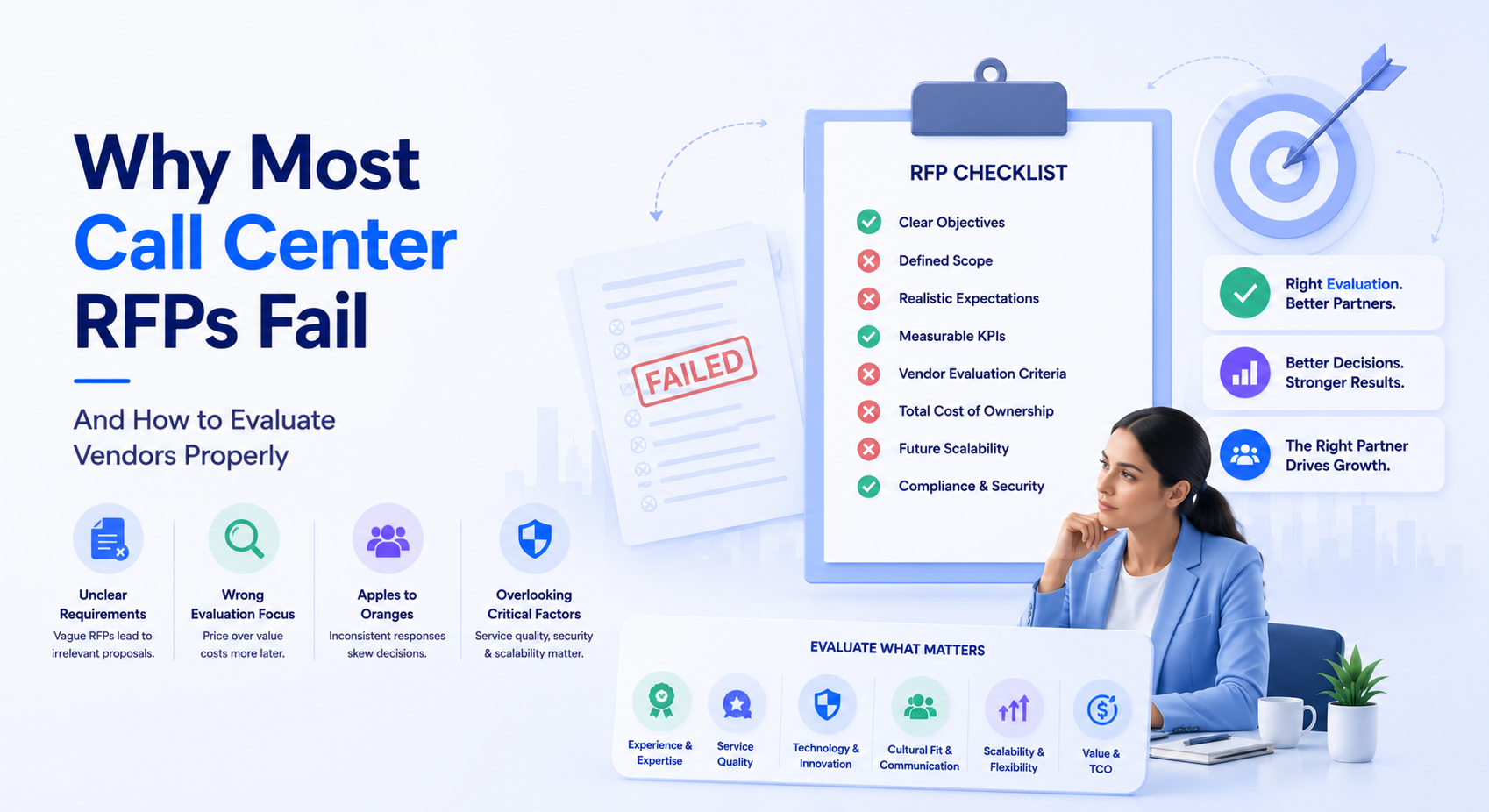
Choose offshore when you need scale, cost efficiency, 24/7 coverage, or a large mixed voice-and-non-voice operation — and you select a mature provider with strong quality systems rather than chasing the lowest possible rate. (Our guide on why enterprises are shifting to outsourced call centers covers the broader business case.)
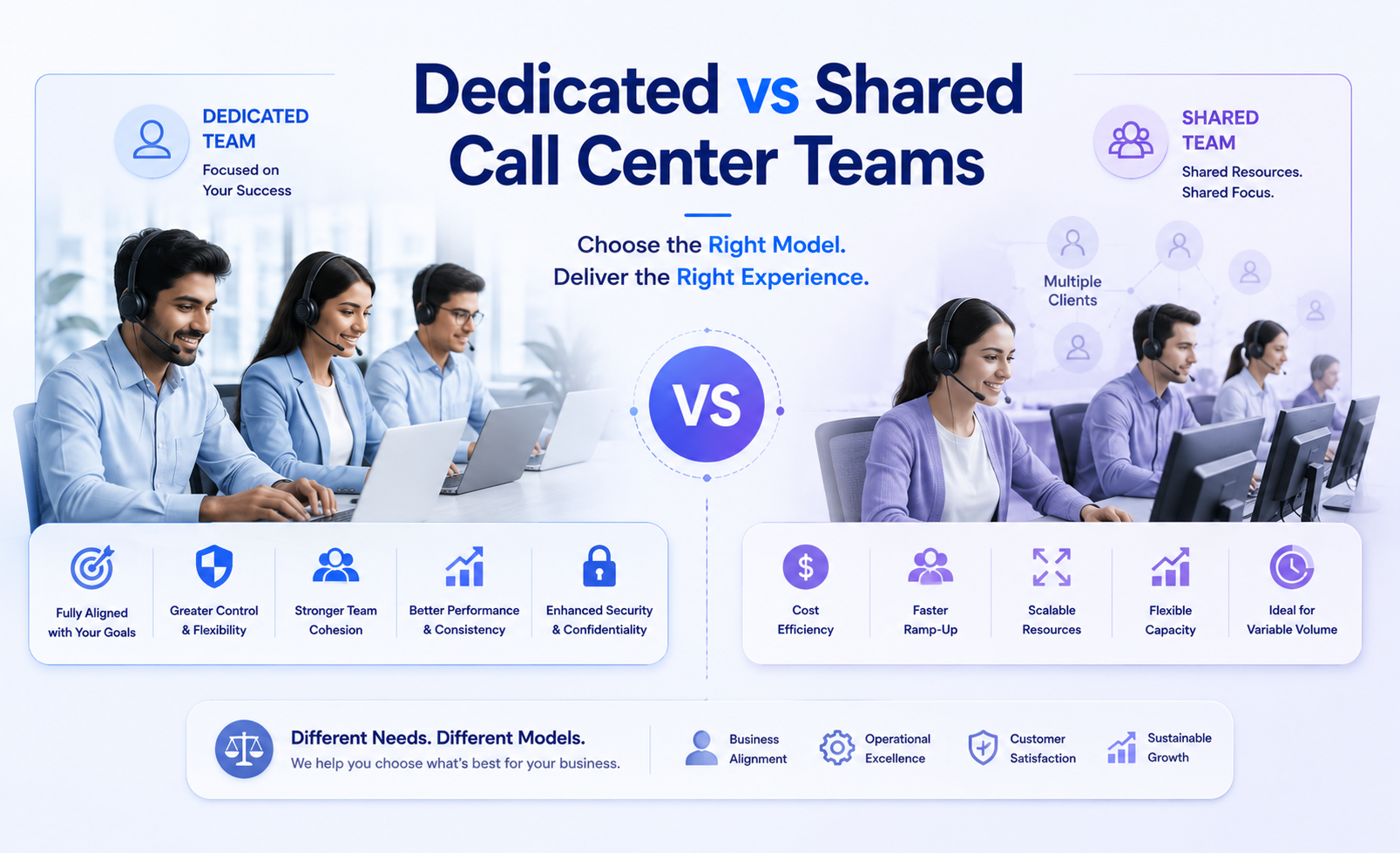
If you’re weighing this against keeping the work internal, our in-house vs outsourced call center comparison breaks down the cost and performance side by side.
Hybrid Models: The Best of More Than One
Many companies find no single model covers every need, so they blend them — matching each function to the location that serves it best. A common configuration uses offshore for high-volume support, back-office, and after-hours coverage; nearshore or onshore for a smaller layer of complex escalations or compliance-sensitive interactions. This optimises cost and quality at the same time, rather than forcing one model to do everything.
The key to making a hybrid work is consistent quality standards across every team: shared knowledge bases, unified CRM access, clear routing logic, and regular cross-team calibration so customers get the same experience no matter who handles the interaction.
Why Total Cost of Ownership Matters More Than Hourly Rate
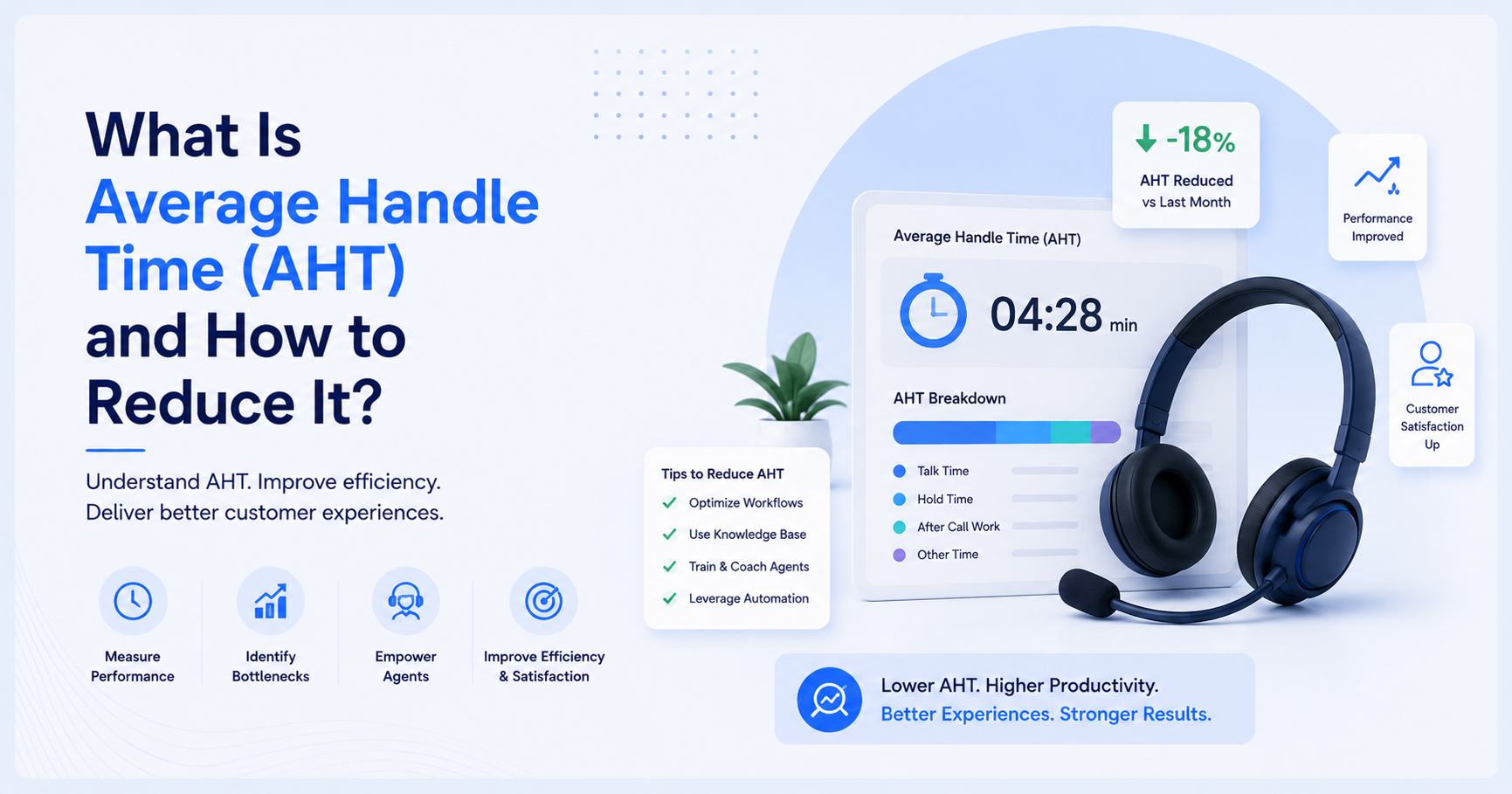
The hourly rate tells an incomplete story. Total cost of ownership (TCO) includes everything you spend to get productive output: agent attrition and retraining, quality rework on unresolved contacts, the management time your internal team spends overseeing the relationship, travel for site visits, and any setup or transition fees.
The practical implication cuts both ways. A poorly chosen low-rate provider with high attrition and rework can erode much of its apparent savings — which is the real argument against simply buying the cheapest seat. But a well-run offshore partner with strong retention and quality systems preserves the cost advantage while delivering reliable output. The lesson isn’t “offshore is risky”; it’s that within any model, provider quality determines whether the headline rate holds up. Run the TCO math on a specific provider, not just a region. Our breakdown of call center outsourcing costs walks through the full calculation.
One Regulatory Shift to Watch (US Market, 2026)
If you serve US consumers, there is a developing rule worth tracking. On March 27, 2026, the FCC released a Notice of Proposed Rulemaking that, if finalised as written, would place new requirements on offshore customer-service operations — including disclosing to consumers when a call is handled outside the US, allowing customers to request a transfer to a US-based representative, requiring that certain sensitive transactions (such as those involving passwords, Social Security numbers, or payment data) be handled by US-based agents, and potentially capping the share of calls handled offshore. As legal analysts at Davis Wright Tremaine note, the FCC has sought comment on a possible 30% offshore limit.
Two things to keep in perspective: this is a proposal, not yet law, and it primarily targets communications providers (with comment sought on whether it extends further). It does not ban offshore work. But it signals rising scrutiny on disclosure and data handling, which makes choosing an offshore partner with strong compliance practices and clear data agreements more important than ever — exactly the kind of governance a mature provider should already have in place.
Frequently Asked Questions
What is the difference between nearshore, offshore, and onshore outsourcing? They differ by geographic distance from your home country. Onshore means a provider within your own country; nearshore means a nearby country usually within one to three time zones; offshore means a distant country, often 6 to 12 time zones away. Each balances cost, communication, cultural alignment, and talent supply differently.
Which call center outsourcing model is cheapest? Offshore is cheapest on a per-hour basis, with rates in countries like India typically ranging from $6 to $14 per hour. Nearshore generally falls between $10 and $18, and onshore ranges from $22 to $45. However, the lowest hourly rate doesn’t always mean the lowest total cost, so weigh attrition, rework, and oversight too.
Is offshore outsourcing good for voice support? Yes — established offshore destinations like India handle large volumes of voice support with strong English-speaking agents and mature quality systems. The main consideration is time-zone difference, which providers manage through overlapping shifts and follow-the-sun coverage. For high-volume, cost-sensitive, or 24/7 voice operations, offshore is often the most practical model.
Why do companies choose India for call center outsourcing? India combines the lowest cost tier with a vast, English-speaking, university-educated workforce, decades of mature BPO infrastructure, and increasingly strong AI and analytics capability. This makes it well suited to scaling large teams quickly, running 24/7 coverage, and handling both voice and non-voice work.
Can I combine nearshore, offshore, and onshore models? Yes. Many companies use a hybrid approach — for example, offshore for high-volume and back-office work, with a smaller nearshore or onshore layer for complex escalations or compliance-sensitive interactions. The key is consistent quality standards and unified systems across all teams.
What is total cost of ownership in call center outsourcing? Total cost of ownership is the full cost of getting productive output from an outsourced team, beyond the hourly rate. It includes attrition and retraining, quality rework, management time, travel, and setup fees. Comparing providers on TCO rather than headline rate gives a more accurate picture of value.
How do I decide which model is right for my business? Match the model to the work. Choose onshore for regulated, complex, low-volume tasks; nearshore for voice work needing close time-zone overlap; and offshore for scale, cost efficiency, 24/7 coverage, and large mixed operations. Within any model, the provider’s quality systems matter as much as the location.
Choosing the Right Model for Your Business
There is no single winner among onshore, nearshore, and offshore call centers — only the model that best fits your priorities for cost, collaboration, scale, and compliance. Onshore offers control at a premium, nearshore offers a time-zone-friendly middle ground, and offshore offers the cost efficiency, deep talent, and round-the-clock scale that make it the backbone of the global outsourcing industry.
Octopus Tech delivers offshore voice and non-voice call center services from India, with multilingual coverage, 24/7 capability, and experience across e-commerce, fintech, telecom, healthcare, and more. If you’re deciding which model fits your operation, get in touch for a no-obligation conversation — or read our guide on how to choose a call center outsourcing partner to evaluate providers within whichever model you pick.