HIPAA-Compliant Call Center Outsourcing: What US Healthcare Companies Need to Know
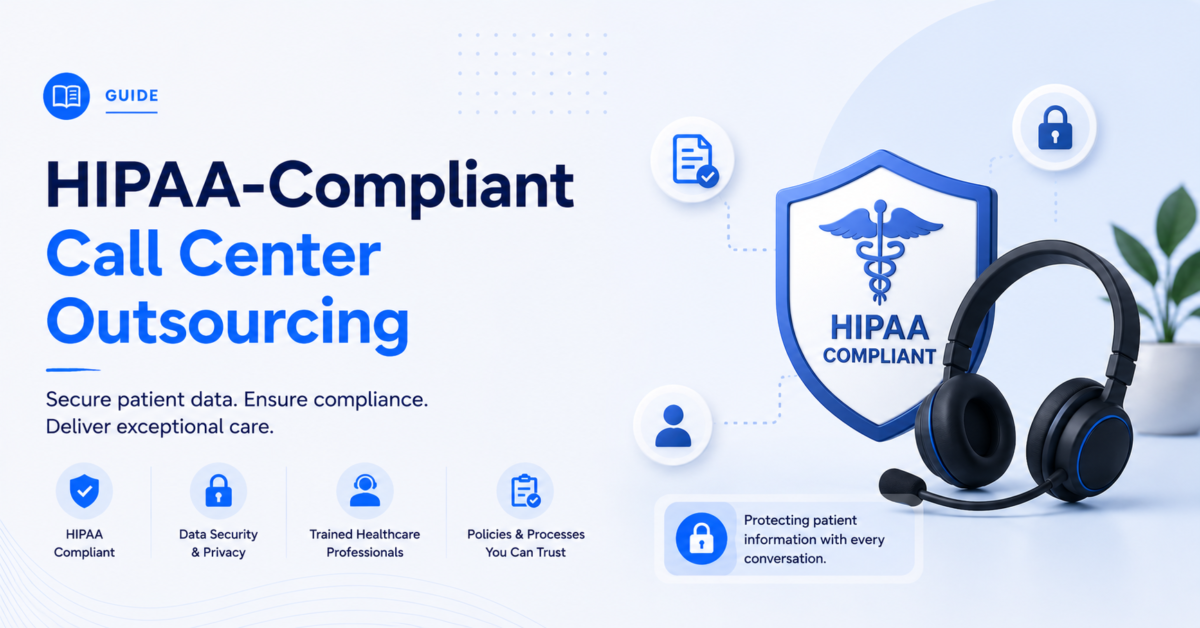
Yes, you can outsource your healthcare call center and stay HIPAA compliant. The single most important requirement is a signed Business Associate Agreement (BAA) with your provider, backed by documented administrative, physical, and technical safeguards for protected health information (PHI) and agents trained specifically in handling it. HIPAA compliance is determined by the safeguards a provider has in place — not by where the provider is located. This guide explains what HIPAA-compliant call center outsourcing actually requires, how to verify a vendor’s compliance, the safeguards that matter most, and the mistakes that create liability.
Key Takeaways
- Outsourcing patient communications is fully compatible with HIPAA, provided the right legal and technical safeguards are in place.
- A signed Business Associate Agreement (BAA) is a legal requirement — never outsource PHI handling without one.
- HIPAA is measured by safeguards, not geography. A provider with strong, documented controls meets the standard regardless of location.
- The biggest risks come from missing BAAs, untrained agents, weak access controls, and improper call recording — not from outsourcing itself.
- A proposed 2026 update to the HIPAA Security Rule would make many “addressable” safeguards mandatory, so choosing a forward-looking partner matters now.
What Does HIPAA-Compliant Call Center Outsourcing Mean?
A HIPAA-compliant call center is an outsourced provider that handles patient interactions — appointment scheduling, billing questions, insurance verification, prescription refills, patient support — while meeting the safeguards required by the US Health Insurance Portability and Accountability Act (HIPAA). When such a provider handles PHI on a healthcare organization’s behalf, it becomes a “business associate” under HIPAA and is directly bound by the law.
The moment an agent accesses a patient’s name alongside any health-related detail, that information becomes PHI. This is far broader than medical records: even confirming that someone has an upcoming cardiology appointment links an identity to a health condition, and is therefore protected. That is why a compliant call center has to treat virtually every healthcare interaction as sensitive by default.
Can You Outsource Healthcare Calls and Stay HIPAA Compliant?
Yes — and a large share of US healthcare providers and payers already do. HIPAA does not prohibit outsourcing, and it does not restrict where a business associate operates. What it requires is that the covered entity (the healthcare organization) and the business associate (the call center) put the proper legal agreement and safeguards in place.
This is a crucial and often-misunderstood point: HIPAA compliance is defined by the controls a provider maintains, not by its geography. The US Department of Health and Human Services (HHS) guidance on business associates makes no geographic distinction. A call center anywhere in the world that maintains controlled facility access, encrypted systems, documented PHI training, and a signed BAA meets the same compliance standard as a facility in the United States. What matters is whether the safeguards genuinely exist and are auditable.
The Essential HIPAA Requirements for an Outsourced Call Center
A compliant outsourcing arrangement rests on a small number of non-negotiable elements. Before sending any PHI to a partner, confirm all of the following are in place:
- A signed Business Associate Agreement (BAA). This is required by law. The BAA defines how the provider may use and protect PHI, sets breach-notification obligations, and establishes liability. Outsourcing without one makes your organization liable for the provider’s violations.
- Administrative safeguards. Documented policies and procedures, a named security officer, risk assessments, and ongoing workforce training on PHI handling and patient rights.
- Physical safeguards. Controlled facility access, secure workstations, clean-desk policies, and restrictions on personal devices in areas where PHI is handled.
- Technical safeguards. End-to-end encryption of data in transit and at rest, role-based access controls, unique user IDs, audit logging, and secure call recording and storage.
- Agent training specific to healthcare. Agents must be trained to verify caller identity, apply the “minimum necessary” standard, and handle PHI correctly — healthcare support is materially different from retail or tech support.
- Ongoing audits and documentation. Compliance is continuous, not a one-time certification. Look for regular internal audits, breach-response procedures, and audit-ready logs.
How to Verify a Call Center Is Actually HIPAA Compliant
Many providers claim HIPAA compliance; fewer can prove it. During evaluation, ask the partner to demonstrate each of the following rather than simply assert it:
- Will you sign a BAA, and can we review your standard terms?
- What independent security certifications do you hold (for example, SOC 2 Type II or ISO 27001)?
- How is PHI encrypted in transit and at rest, and how is access controlled and logged?
- What does your agent HIPAA training program cover, and how often is it refreshed?
- What is your breach-notification process and timeline?
- How are calls recorded, stored, and eventually deleted, and is consent documented?
- Can you provide references from other healthcare clients?
Vague answers about HIPAA, little or no genuine healthcare experience, and the absence of an audit process or documentation are clear red flags. A true healthcare outsourcing partner is transparent about its safeguards and willing to show how it stays compliant.
Common HIPAA Compliance Mistakes to Avoid
Most compliance failures in outsourced call centers come from a handful of avoidable mistakes:
- Outsourcing without a signed BAA. This is the most common and most serious error, and it transfers liability straight to your organization.
- Skipping caller identity verification. Shortcuts violate the minimum-necessary standard and open the door to social engineering. Use consistent multi-step verification on every call.
- Improper call recording or storage. Recording without documented consent, or storing recordings indefinitely, creates compliance exposure. Obtain consent, encrypt recordings, retain them only as long as required, and keep audit-ready logs.
- Weak access controls. Only authorized agents should be able to view or handle PHI, and access should be logged and reviewable.
- Treating compliance as one-and-done. HIPAA expects an ongoing, living program of risk assessment, training, and documentation — not a binder that sits on a shelf.
A Proposed 2026 HIPAA Security Rule Update to Watch
Healthcare organizations evaluating outsourcing in 2026 should be aware of a significant pending change. In a Notice of Proposed Rulemaking published in the Federal Register on January 6, 2025, HHS’s Office for Civil Rights proposed the first major overhaul of the HIPAA Security Rule in over two decades, aimed at strengthening cybersecurity protections for electronic PHI.
The key point for buyers: as HHS confirms on its regulatory initiatives page, this is a proposed rule that applies to covered entities and their business associates — it has not been finalized. The comment period has closed and OCR is reviewing the feedback it received; a final rule has been targeted for around mid-2026 on OCR’s agenda, but the agency has not confirmed it will proceed on that timeline or in the proposed form. If finalized as written, the update would tighten requirements such as encryption, multi-factor authentication, and written, regularly tested policies — moving several previously “addressable” measures to mandatory.
The practical takeaway is straightforward: choose an outsourcing partner whose security posture is already strong and forward-looking, so that tighter requirements, if and when they land, don’t force a disruptive scramble.
Why Healthcare Companies Outsource Their Call Centers
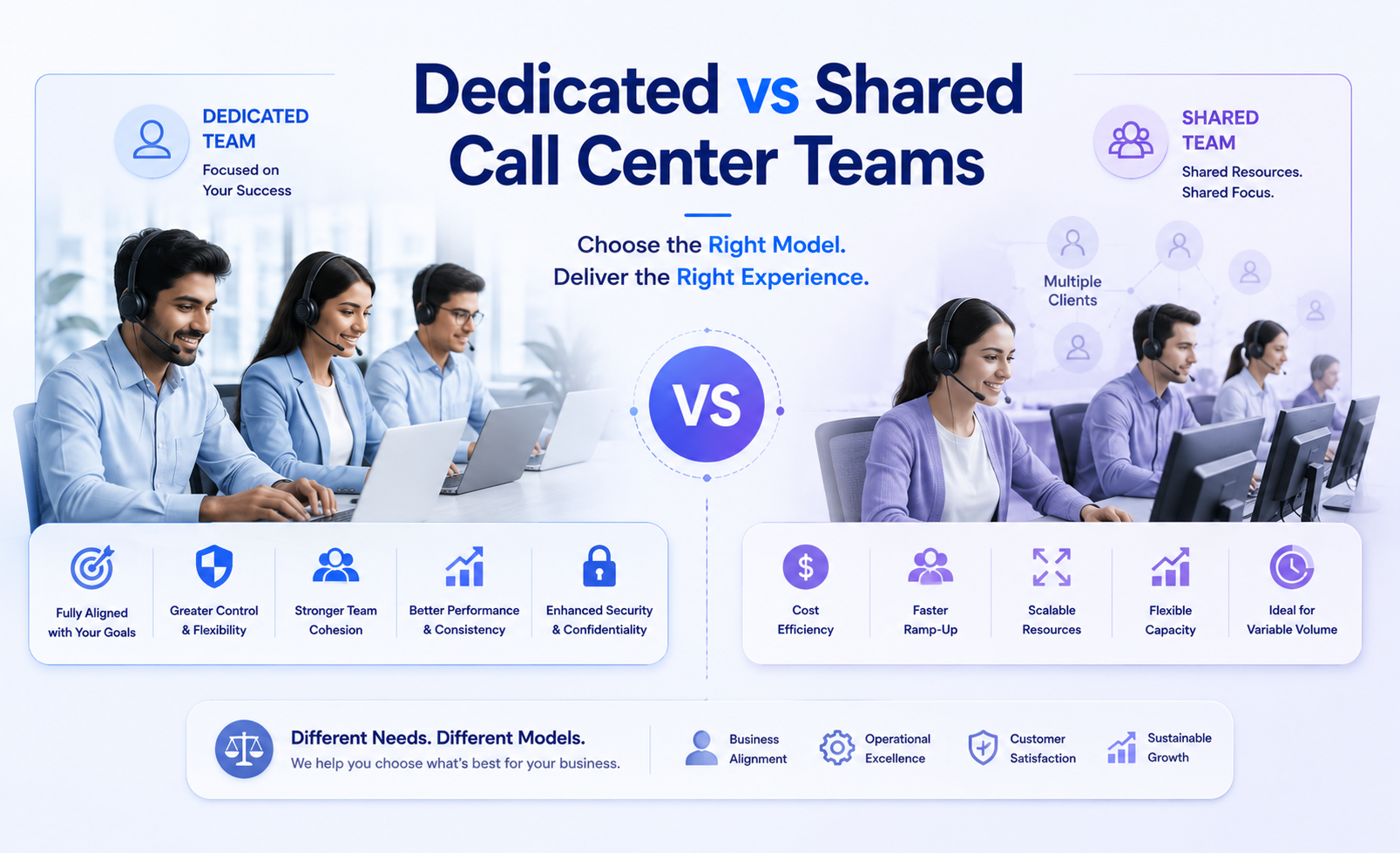
When the compliance foundation is solid, outsourcing delivers real advantages for healthcare organizations: elastic capacity to absorb variable call volumes (open enrollment, seasonal spikes, post-procedure follow-ups) without overstaffing, meaningful cost savings versus building and maintaining an in-house team, extended or around-the-clock patient coverage, and access to agents and infrastructure purpose-built for secure patient communication. The goal is to free clinical and administrative staff to focus on care while patients still receive fast, accurate, secure support.
How Octopus Tech Approaches Healthcare Support
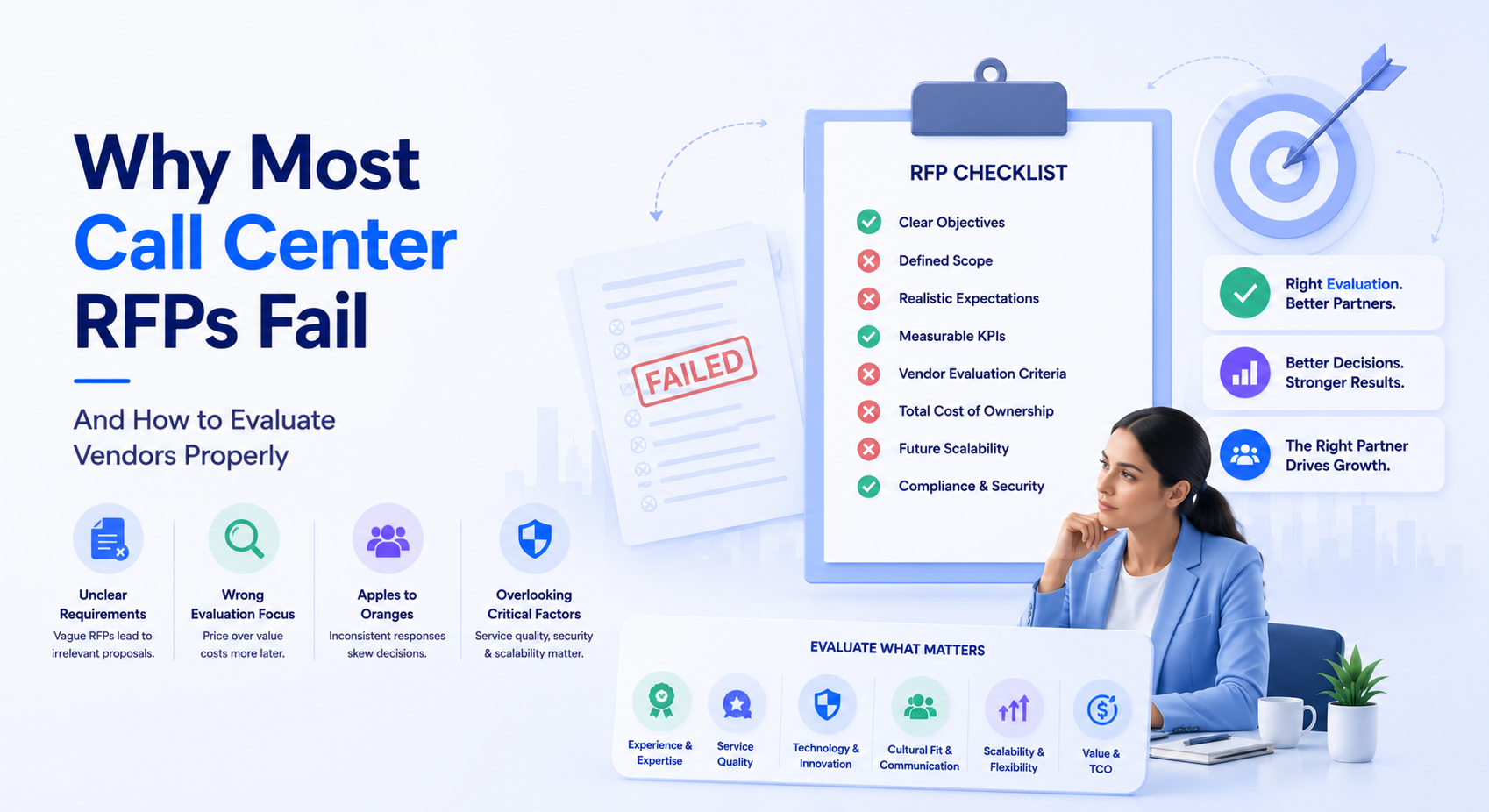
Octopus Tech has provided healthcare BPO services as part of its outsourcing offering since 2011, delivering voice and non-voice patient support from multiple delivery centers in India. Healthcare interactions demand a different standard of care than general customer service, which is why secure handling of patient information, trained agents, and documented processes sit at the center of any healthcare engagement. If you’re evaluating partners, our guide on how to choose a call center outsourcing partner covers the full vendor-evaluation process, and our top benefits of outsourcing healthcare BPO article explains the business case in more depth.
Frequently Asked Questions
Can a call center be HIPAA compliant?
Yes. A call center becomes a HIPAA business associate when it handles PHI for a healthcare organization, and it can be fully compliant by signing a Business Associate Agreement and maintaining the required administrative, physical, and technical safeguards, along with trained agents and ongoing audits.
What is a Business Associate Agreement (BAA)?
A BAA is a legally required contract between a healthcare organization (the covered entity) and a vendor that handles PHI on its behalf (the business associate). It defines how PHI may be used and protected, sets breach-notification obligations, and establishes liability. Outsourcing PHI handling without a signed BAA is itself a HIPAA violation.
Can healthcare calls be outsourced offshore while staying HIPAA compliant?
Yes. HIPAA does not restrict where a business associate operates; it requires that proper safeguards and a signed BAA are in place. HHS guidance makes no geographic distinction, so an offshore provider with documented encryption, access controls, facility security, and PHI training meets the same standard as a domestic one. Compliance is about safeguards, not location.
What happens if an outsourced call center violates HIPAA?
Both the business associate and, in many cases, the covered entity can face significant penalties, which scale with the level of culpability up to willful neglect. Beyond fines, violations damage patient trust and can trigger mandatory breach notifications. This is why a signed BAA, strong safeguards, and a partner with a proven compliance track record are essential.
What certifications should a HIPAA-compliant call center have?
While HIPAA itself is a regulation rather than a certification, strong providers back their compliance with independent security certifications such as SOC 2 Type II and ISO 27001, plus documented HIPAA training, encryption, access controls, and audit logging. Always ask to see evidence rather than accepting a general claim.
Is the HIPAA Security Rule changing in 2026?
A major update to the HIPAA Security Rule has been proposed but not finalized. HHS’s Office for Civil Rights published the proposed rule in January 2025 and is reviewing public comments; a final rule has been targeted for around mid-2026 but is not confirmed. If finalized, it would strengthen requirements like encryption and multi-factor authentication, so choosing a security-forward partner now is prudent.
What patient services can a HIPAA-compliant call center handle?
A compliant healthcare call center can handle appointment scheduling and reminders, insurance verification, billing and payment questions, prescription refill requests, patient inquiries and follow-ups, and after-hours support — all while protecting PHI through proper safeguards and the minimum-necessary standard.
Outsourcing Patient Support Without Compromising Compliance
HIPAA-compliant call center outsourcing is not a contradiction — it is a well-established practice that lets healthcare organizations scale patient support, control costs, and extend coverage while protecting sensitive data. The key is rigorous: a signed BAA, documented safeguards, trained agents, ongoing audits, and a partner who treats PHI with the same care your clinical teams do. Verify compliance with evidence rather than claims, watch the evolving Security Rule, and the risk becomes entirely manageable.
Octopus Tech provides healthcare BPO and patient-support outsourcing from India with experience across the sector since 2011. If you’re exploring secure, cost-effective patient communication support, get in touch for a no-obligation conversation about your requirements.