Dedicated vs Shared Call Center Teams: Which Is Better?
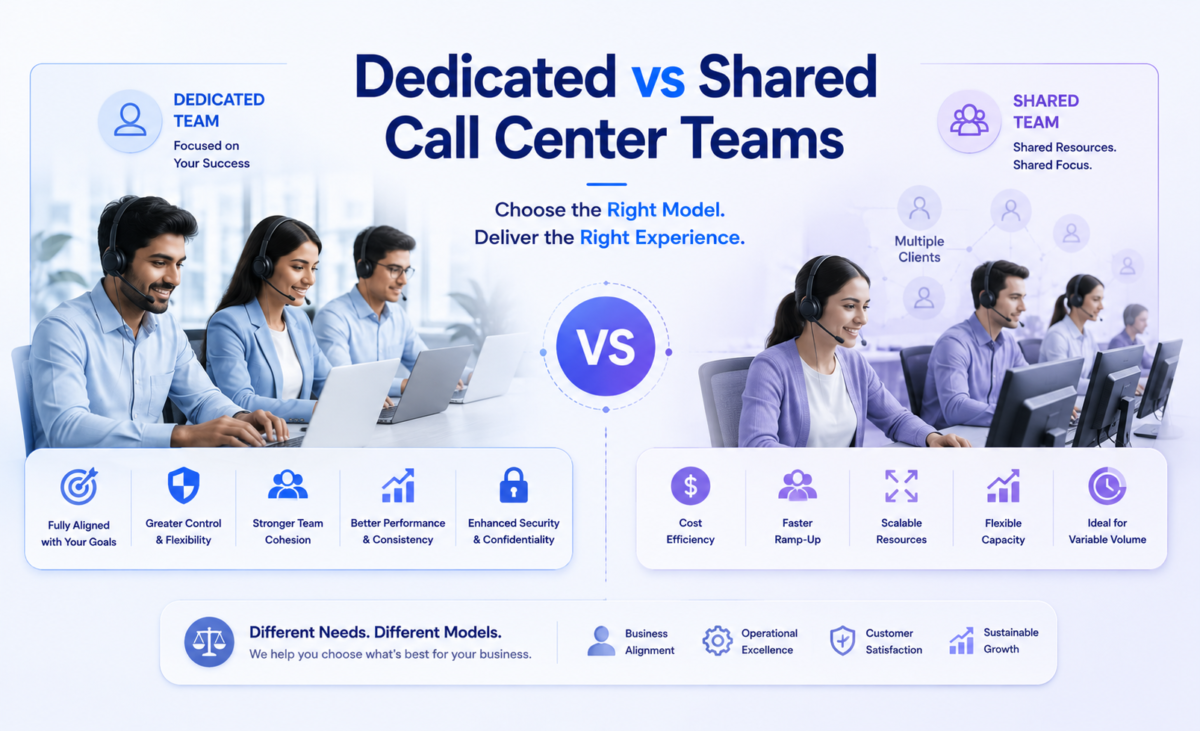
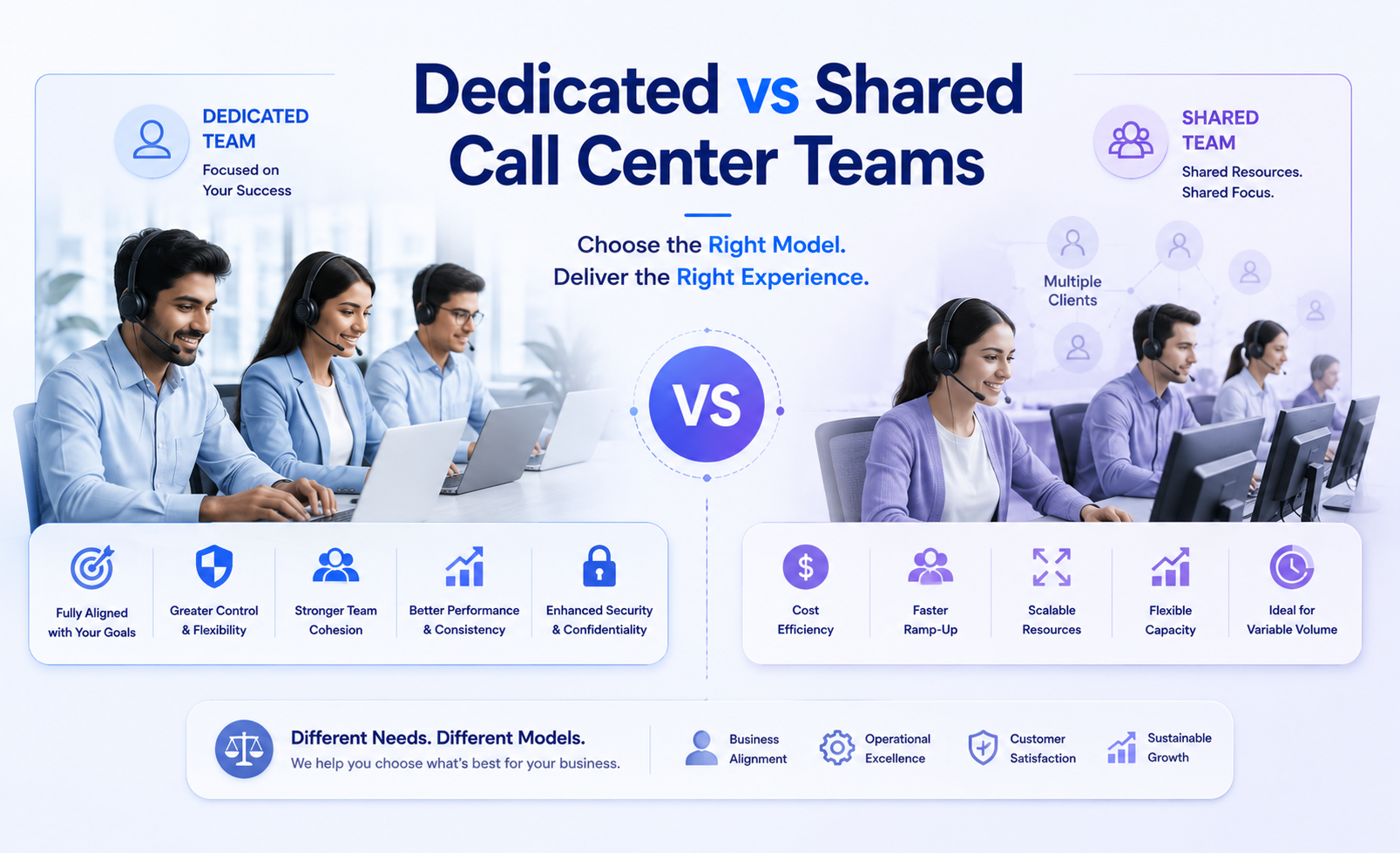
The short answer: dedicated teams win on quality, brand knowledge, and control, while shared teams win on cost and flexibility, so the right choice depends on your call volume, complexity, and how central support is to your brand. A dedicated team works only on your account; a shared team handles your calls alongside other clients’ and you pay only for the time used. Neither is universally “better.” High-volume, complex, or brand-critical support usually justifies dedicated agents; lower-volume, seasonal, or straightforward support is often better served by a shared model, and many businesses land on a blend of both. This guide breaks down exactly how the two models differ, what each really costs, and a clear framework for choosing.
Key Takeaways
- Dedicated agents work exclusively on your account, delivering deeper brand knowledge, higher first-call resolution, and more control, at a higher fixed cost.
- Shared agents handle multiple clients and are billed by usage (often per minute), making them cheaper and more flexible but less specialized.
- Call volume is the deciding factor: steady, high volume justifies dedicated agents; low or unpredictable volume favors shared.
- The quality gap has real economics, since higher first-call resolution lowers cost and lifts satisfaction at roughly a one-to-one rate.
- A blended model, a dedicated core that flexes with shared agents at peaks, often delivers the best balance of cost and quality.
What Is a Dedicated Call Center Team?
A dedicated team is a group of agents who work exclusively on your account. They’re trained only on your products, systems, and brand voice, and they function as an extension of your own company rather than a rotating pool. Because their attention isn’t split across clients, they build genuine expertise over time, which shows up in faster resolutions and more consistent, on-brand interactions.
Dedicated teams are typically priced on a time basis, per agent, per hour or per month, regardless of how busy any given hour is. That fixed cost is the trade-off for exclusivity: you’re paying to reserve that capacity and expertise, whether your call volume peaks or dips.
What Is a Shared Call Center Team?
A shared team is a pool of agents who handle your calls alongside those of several other clients. When a call comes in, the next available agent takes it, even if their previous call was for a different brand. These agents are usually experienced multitaskers who can switch between client programs quickly.
Shared models are typically billed by usage, often per minute or per call, so you pay only for the time agents actually spend on your contacts. That makes the cost variable and lower at modest volumes, since you’re not paying for idle agents waiting for your phone to ring. The trade-off is depth: an agent splitting attention across multiple brands can’t know yours as intimately as a dedicated one, and you have less direct control over consistency.
Dedicated vs Shared: Side-by-Side Comparison
Here’s how the two models compare across the factors that matter most:
| Factor | Dedicated Team | Shared Team |
|---|---|---|
| Focus | Works only on your account | Handles multiple clients |
| Brand & product knowledge | Deep and specialized | Broader but shallower |
| Cost model | Fixed, per agent (hourly/monthly) | Variable, per minute or per call |
| Cost level | Higher | Lower at modest volume |
| First-call resolution | Higher (expertise) | Lower on complex issues |
| Quality control | More control and consistency | Less direct control |
| Flexibility for volume swings | Lower (fixed capacity) | Higher (scales with usage) |
| Best for | High-volume, complex, brand-critical support | Low-volume, seasonal, straightforward support |
The Real Cost Difference, Explained
Cost is usually the first question, but the headline rate can mislead. The two models bill differently, which means a fair comparison depends entirely on your volume.
With a shared team, you pay per minute or per call, so cost scales directly with usage. At low or uneven volume, this is highly efficient, since you never pay for idle time. With a dedicated team, you pay a fixed amount to reserve agents regardless of volume, so the cost per call drops as those agents stay busy and rises if they sit idle. The crossover point is the key insight: below a certain steady volume, shared is cheaper; above it, a fully utilized dedicated team often costs less per resolved contact, while also delivering higher quality.
This is why the cheapest headline rate isn’t always the cheapest outcome. A dedicated agent has a higher cost per call on paper, but their expertise resolves more issues on the first contact, which avoids the repeat calls and escalations that quietly inflate the true cost of a shared model on complex work. For a deeper breakdown of how outsourced pricing actually works, see our guide to the cost of outsourcing call center services.
The Quality Difference and Why It Pays Off
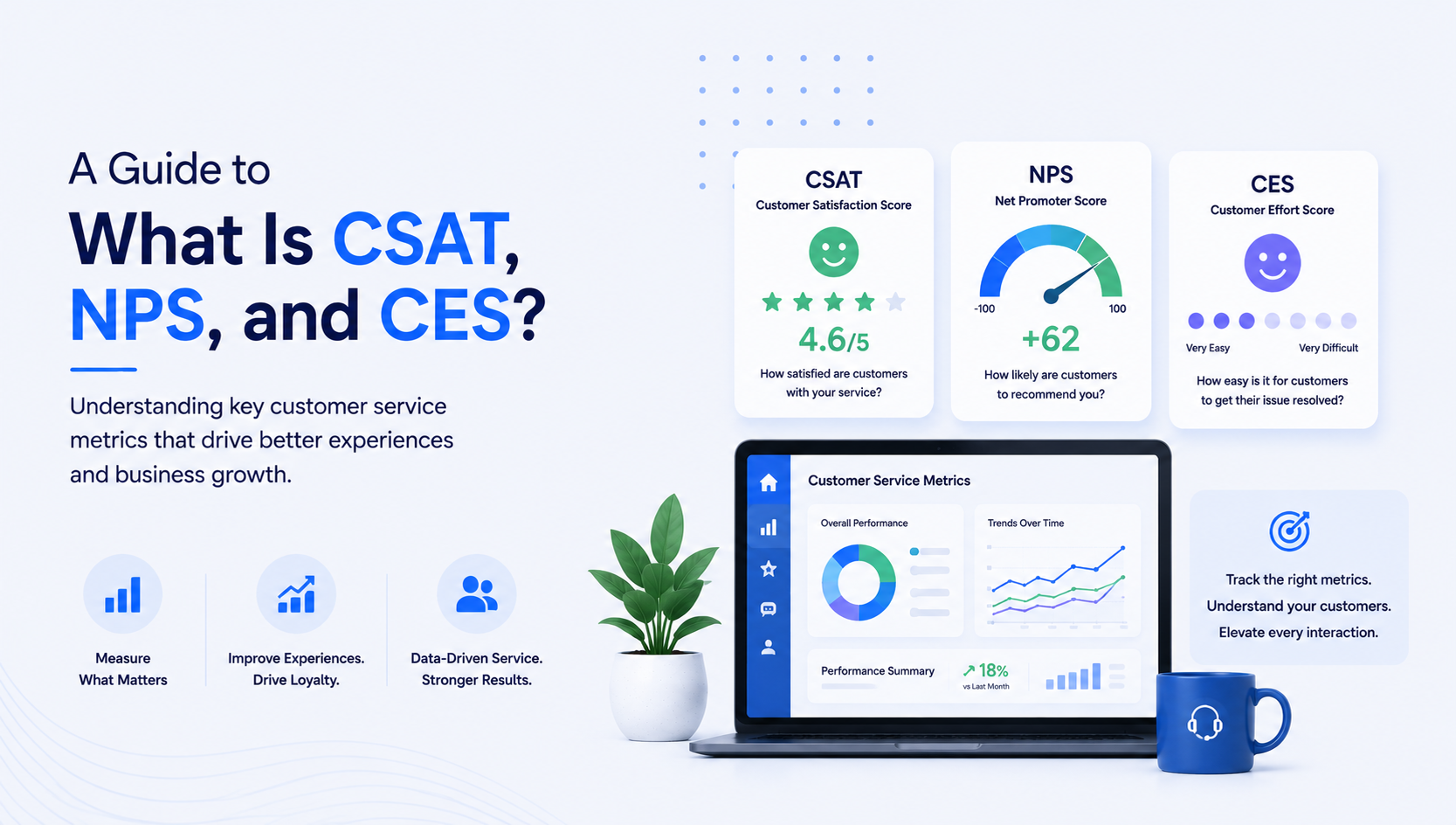
The strongest argument for dedicated teams isn’t comfort; it’s measurable performance. The clearest lever is first-call resolution (FCR), the share of issues solved on the first contact, which rises when agents know your business deeply enough to resolve complex problems without transferring or escalating.
FCR isn’t a soft metric. According to SQM Group, every one percentage point of FCR improvement corresponds to roughly a one-point gain in customer satisfaction and a one-point reduction in operating costs, because agents spend less time on repeat contacts. In other words, the expertise that dedicated agents build pays for itself twice over: happier customers and lower cost per issue. For straightforward, transactional calls the gap narrows and a shared agent performs perfectly well, but for complex or high-stakes support, the resolution advantage of a dedicated team is exactly where the value lives. Our explainer on first-call resolution covers how to measure and improve it.
When to Choose a Dedicated Team
A dedicated team is the better fit when one or more of these is true:
- You have steady, high call volume. Enough consistent volume to keep several full-time agents busy is the classic threshold; once agents are well-utilized, dedicated economics work in your favor.
- Your support is complex. If agents must navigate many systems, deep product knowledge, or technical troubleshooting, specialization dramatically improves resolution.
- Support is central to your brand. For high-touch industries and premium brands, consistent, on-brand, expert service is worth the premium.
- You need control and consistency. Regulated sectors and detailed processes benefit from a team you train, manage, and measure directly.
Insurance, fintech, healthcare, and technical-support operations frequently choose dedicated teams for exactly these reasons: their interactions demand knowledge a rotating agent can’t realistically maintain.
When to Choose a Shared Team
A shared team is usually the smarter choice when:
- Your volume is low or hard to predict. If you don’t have enough steady calls to keep dedicated agents busy, you’d be paying for idle time; shared usage-based billing avoids that.
- Demand is seasonal or spiky. Shared teams absorb surges, like holiday peaks or campaign spikes, without you carrying that capacity year-round.
- Your interactions are straightforward. For simple, transactional queries, a capable shared agent resolves them just as well at lower cost.
- You’re starting small or testing. Shared models are a low-commitment way to launch outsourced support and learn your real volume patterns before scaling.
Small and mid-sized businesses, early-stage operations, and companies with pronounced seasonality often get the best value from a shared model, sometimes using it to supplement an existing in-house team during peaks.
The Best of Both: The Blended Model
The choice isn’t always either/or. Many businesses land on a blended model: a small dedicated core that knows your brand deeply, supplemented by shared agents who flex in during peaks or handle overflow and simpler queries. This pairs the consistency and expertise of dedicated agents with the cost efficiency and scalability of shared ones.
A common pattern is to route complex, high-value, or sensitive interactions to the dedicated core while shared agents absorb routine volume and surges. You get expert handling where it matters and elastic capacity where it doesn’t, which is often the most cost-effective configuration overall. The right split depends on your volume profile and how much of your contact mix is genuinely complex versus routine.
How to Decide: A Quick Framework
To choose with confidence, work through four questions in order:
- 1. What’s your volume? Steady and high points to dedicated; low or unpredictable points to shared.
- 2. How complex are your interactions? Complex, multi-system, or specialized support favors dedicated; simple and transactional favors shared.
- 3. How brand-critical is support? If service defines your customer experience, lean dedicated; if it’s a cost center for basic queries, shared works.
- 4. How much does volume fluctuate? Heavy seasonality favors shared or a blended core-plus-flex setup.
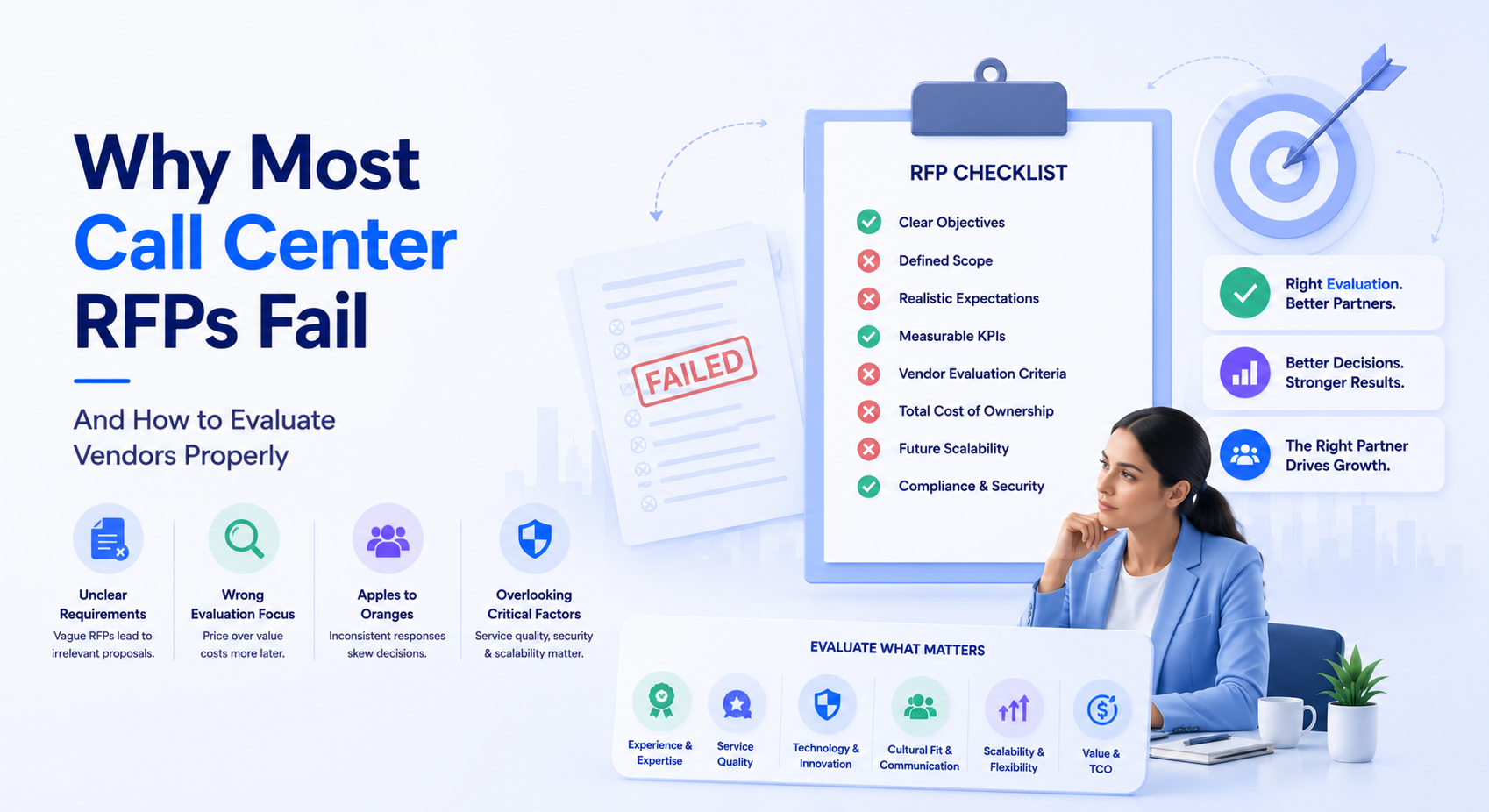
If your answers point in different directions, that’s usually the signal to consider a blended model. And whichever model you choose, the provider matters as much as the structure; our checklist for choosing a call center outsourcing partner covers what to evaluate before you commit.
How Octopus Tech Approaches Team Models
Octopus Tech has delivered outsourced call center services from India since 2011, offering dedicated, shared, and blended team models matched to each client’s volume, complexity, and budget. The right structure isn’t a one-size decision; it depends on how your calls actually behave, which is why we’d rather understand your volume and contact mix first than push a single model. If you’re weighing dedicated versus shared support, get in touch to talk through what fits your operation.
Frequently Asked Questions
What is the difference between a dedicated and shared call center team?
A dedicated team works exclusively on your account and is billed at a fixed rate per agent, giving you deeper brand knowledge and more control. A shared team handles your calls alongside other clients’ and is billed by usage (per minute or per call), making it cheaper and more flexible but less specialized in your business.
Is a dedicated or shared call center team cheaper?
It depends on volume. A shared team is cheaper at low or unpredictable volume because you pay only for usage and never for idle agents. A dedicated team can cost less per resolved contact once you have enough steady volume to keep the agents busy, and its higher first-call resolution lowers the hidden cost of repeat calls on complex work.
Which is better for customer satisfaction, dedicated or shared agents?
Dedicated agents generally produce higher customer satisfaction on complex or brand-critical support because their specialized knowledge resolves more issues on the first contact. Since first-call resolution closely tracks satisfaction, the expertise of a dedicated team translates directly into a better customer experience. For simple, transactional queries, shared agents perform comparably.
When should I use a shared call center team?
Use a shared team when your call volume is low or hard to predict, your demand is seasonal or spiky, your interactions are straightforward, or you’re launching outsourced support and want a low-commitment way to start. Shared models are especially cost-effective for small and mid-sized businesses and for absorbing peak-season surges.
What is a blended call center model?
A blended model combines a small dedicated core team that knows your brand deeply with shared agents who flex in during peaks or handle simpler, overflow queries. It pairs the expertise and consistency of dedicated agents with the cost efficiency and scalability of shared ones, and is often the most cost-effective overall configuration.
How much call volume do I need to justify a dedicated team?
The practical threshold is enough steady, predictable volume to keep at least several full-time agents consistently busy throughout the day. Below that, dedicated agents spend time idle while you still pay for them, so a shared or blended model usually delivers better value until your volume grows.
Can I switch from a shared to a dedicated team later?
Yes. Many businesses start with a shared model to launch quickly and learn their real volume patterns, then move to a dedicated or blended setup as volume grows and support becomes more central. A good outsourcing partner will help you scale between models as your needs change rather than locking you into one.
Choosing the Right Model for Your Business
There’s no universal winner in the dedicated-versus-shared debate; there’s only the right fit for your volume, complexity, and priorities. Dedicated teams deliver expertise, consistency, and control that pay off on complex, high-volume, brand-critical support. Shared teams deliver cost efficiency and flexibility that suit lower-volume, seasonal, or straightforward work. And for many businesses, a blended model captures the best of both. Start with your call volume and contact mix, match the model to how your support actually behaves, and you’ll get both the economics and the experience right.
Octopus Tech provides outsourced call center and BPO services from India across dedicated, shared, and blended models. To discuss which structure fits your volume and goals, get in touch for a no-obligation conversation.