Why Outsource Multilingual Support to India?
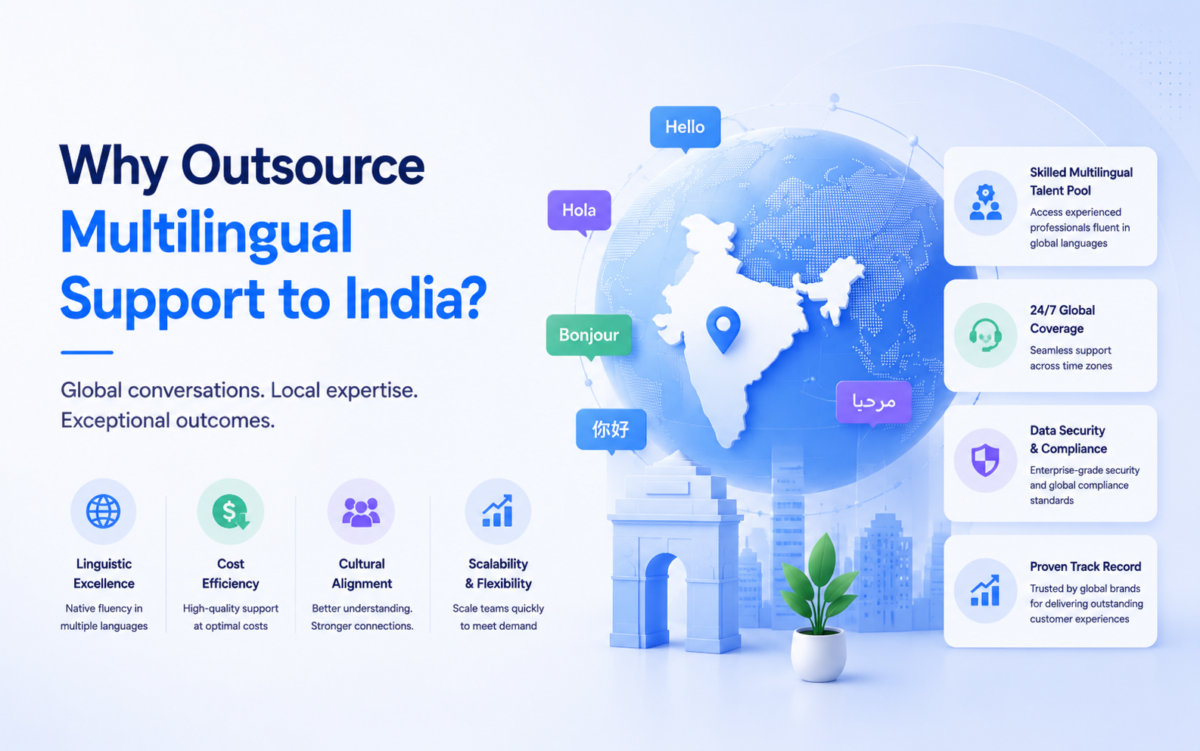
Businesses outsource multilingual customer support to India because it combines four advantages that are hard to find together anywhere else: a vast, English-speaking and increasingly multilingual talent pool, significant cost savings versus Western in-house teams, round-the-clock time-zone coverage, and decades of mature contact-center infrastructure. For companies that need to serve customers in several languages without the cost and complexity of building native-speaker teams in-house, India offers broad coverage and scale at a fraction of onshore cost. This guide explains the specific reasons India is a leading base for multilingual support, the honest considerations to weigh, and how to get it right.
Key Takeaways
- India offers one of the world’s largest English-speaking, university-educated workforces, plus growing coverage of global languages like Spanish, French, German, and Arabic.
- Outsourcing to India is far more cost-effective than building in-house multilingual teams in Western markets.
- India’s time zones support genuine 24/7 and follow-the-sun coverage for global customer bases.
- Decades of mature BPO infrastructure mean established processes, technology, and quality systems.
- The keys to success are cultural and accent training, the right mix of dedicated agents and interpretation/AI, and a partner with genuine language coverage.
The Core Reasons to Outsource Multilingual Support to India
India has become a leading global destination for multilingual customer support for several reinforcing reasons.
- A vast, skilled talent pool. India has one of the world’s largest pools of educated, English-speaking professionals, increasingly supplemented by agents fluent in other major languages. This depth makes it possible to staff support at scale quickly.
- Significant cost efficiency. Building an in-house multilingual team in a Western country — recruiting native speakers, training them, and maintaining infrastructure — is expensive. Outsourcing to India cuts recruitment, training, and operational costs substantially while still providing skilled agents and modern technology.
- 24/7 time-zone coverage. India’s time zones make it well suited to round-the-clock and follow-the-sun support, so global customers get help at any hour without a Western operation paying overnight premiums.
- Mature infrastructure. India’s contact-center industry has invested for decades in technology, facilities, and processes, giving outsourcing partners established quality systems and scalability rather than a standing start.
India’s Language Advantage, Honestly Framed
India’s multilingual strength has two layers, and it’s worth being clear about both.
The first and strongest layer is English. India offers an enormous, university-educated, English-speaking workforce, which makes it exceptionally well suited to serving English-language customers in the US, UK, Australia, and other Western markets at scale and low cost. For many businesses, this alone is the core value.
The second layer is coverage of other global languages. Indian providers increasingly staff agents fluent in major world languages such as Spanish, French, German, Mandarin, and Arabic, and extend further reach through interpretation services and AI-powered translation. For high-volume languages, dedicated bilingual agents deliver the best quality; for the long tail of lower-volume languages, interpretation or AI fills the gap. The practical result is broad multilingual coverage — but the right approach is to confirm a provider can genuinely staff your specific priority languages rather than assume blanket coverage. Our complete guide to multilingual call center services explains how these delivery models fit together.
The Business Case: Why It Pays Off
The cost and talent advantages matter only because language itself drives business outcomes. Research from CSA Research found that 76% of consumers prefer to buy in their native language, and 75% are more likely to repurchase when supported in it. When a capable, well-trained agent communicates clearly in the customer’s language, issues are resolved in fewer exchanges, first-contact resolution improves, customers call back less, and they trust the brand with future purchases. Outsourcing to India lets businesses capture those gains across multiple languages without the cost of building equivalent teams onshore — turning multilingual support from an expensive overhead into a scalable growth lever.
Honest Considerations to Weigh
A balanced view matters, because multilingual outsourcing to India works best when you plan for its challenges, not just its benefits:
- Accent and cultural fluency. Language ability alone isn’t enough — tone and communication style vary by culture. The best providers invest in accent neutralization and cultural training so interactions feel natural to the end customer, not scripted.
- Time-zone management. India’s time zones are an asset for 24/7 coverage, but real-time collaboration with a Western client team happens in a narrower window. Mature providers manage this with overlapping shifts and strong reporting.
- Genuine language depth. Broad “we cover 30+ languages” claims can mask thin staffing in specific languages. Verify dedicated-agent availability for your priority languages versus interpretation for the rest.
- Consistency across languages. Customers should get the same answers regardless of language, which requires unified knowledge bases and quality assurance across every language a provider supports.
Addressing these upfront is what separates a successful engagement from a frustrating one — and a strong, experienced partner will already have answers for each.
How India Compares to Other Options
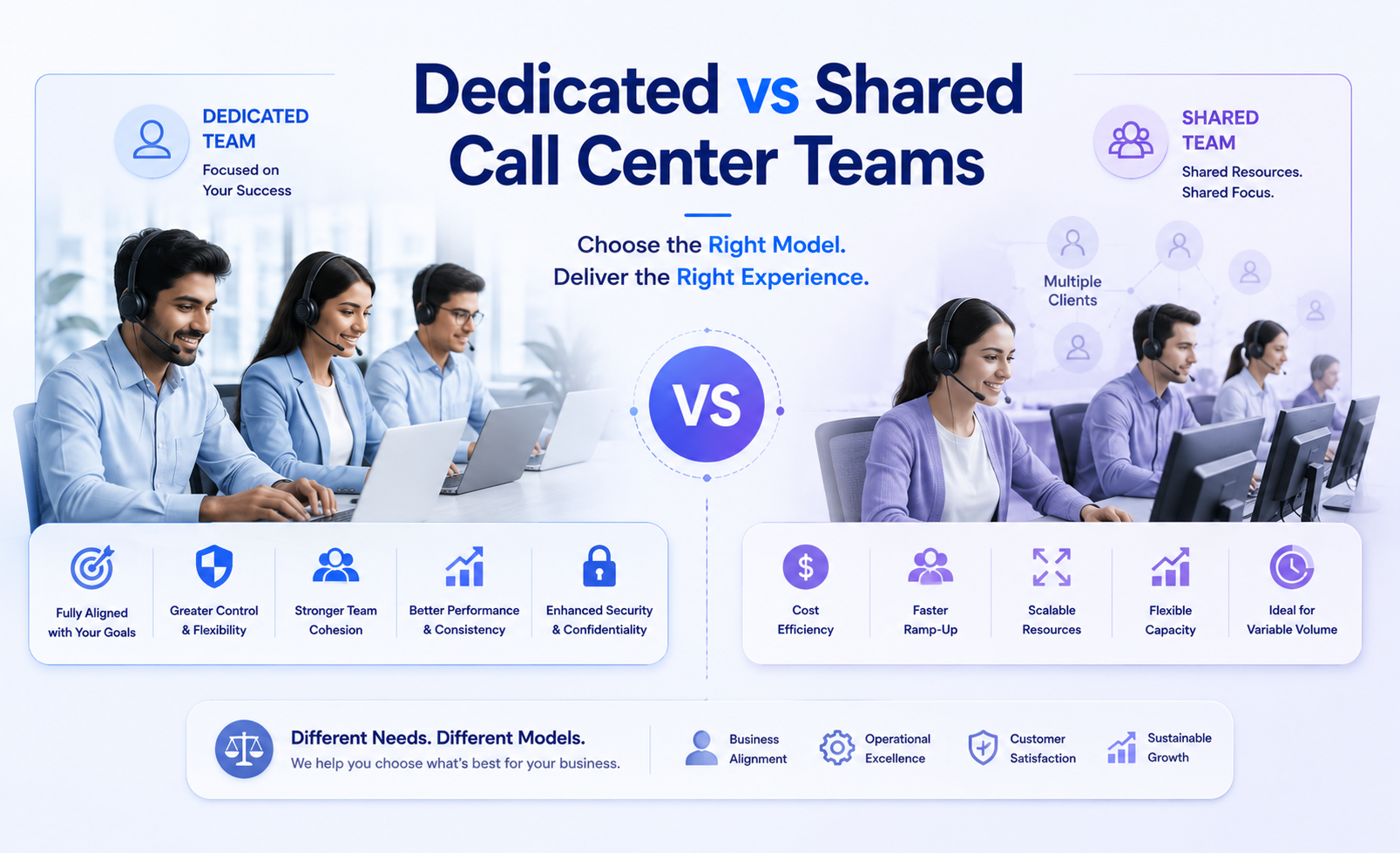
For multilingual support serving Western markets, India’s main alternatives are nearshore providers (such as Latin America for Spanish-language US support), the Philippines (strong English, similar cost tier), and in-house teams. Nearshore can win on time-zone overlap for a single dominant language; the Philippines is a close peer for English voice. But for broad multilingual coverage combined with the lowest cost, deepest talent pool, and mature infrastructure, India remains a leading choice — especially when English is a core requirement alongside other languages. For the full comparison of delivery locations, see our guide to nearshore, offshore, and onshore models, and our overview of the pros and cons of outsourcing to India.
How Octopus Tech Supports Multilingual Operations
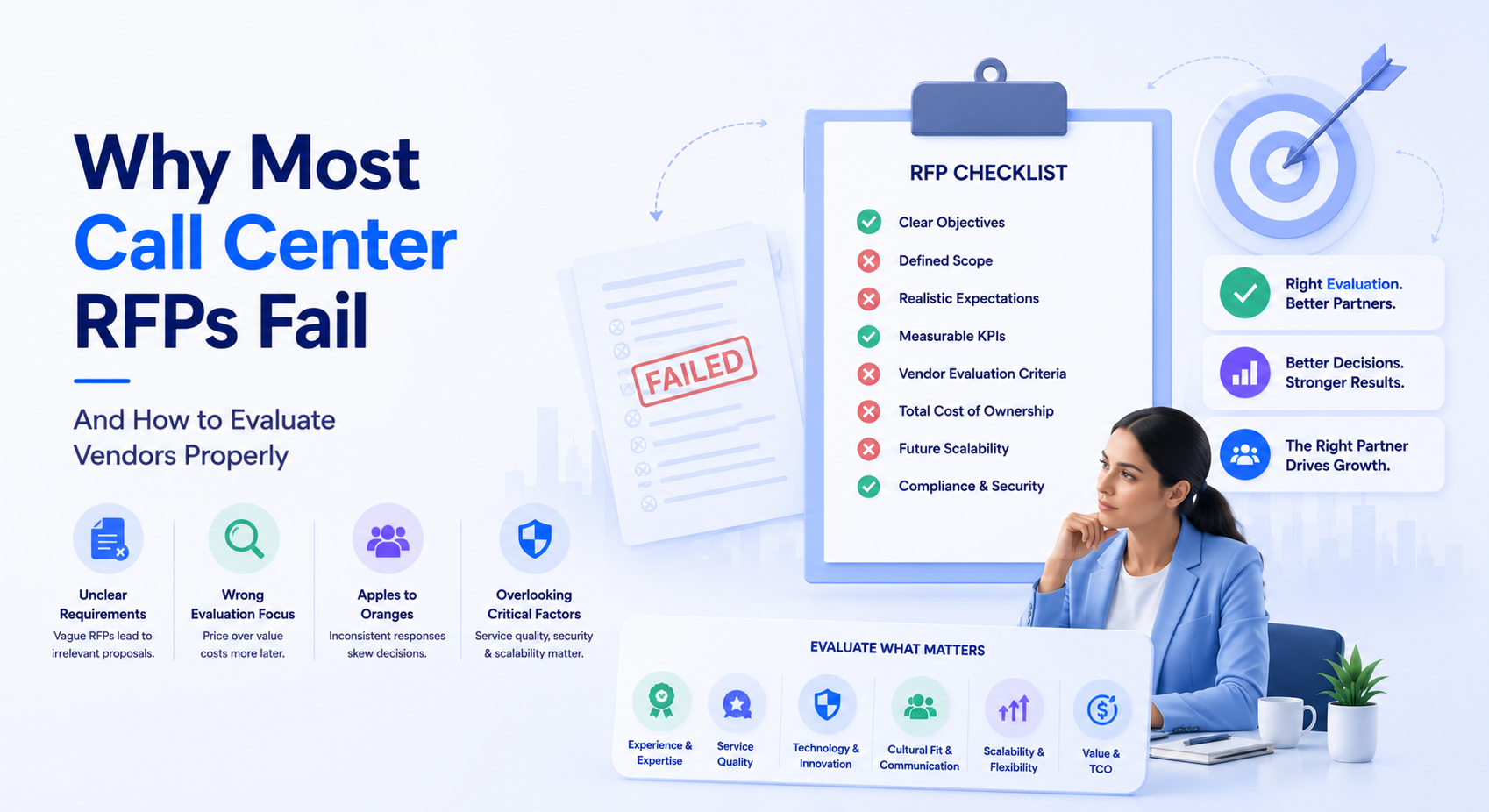
Octopus Tech has delivered outsourced call center and BPO services from India since 2011, with multilingual and multichannel capability and round-the-clock coverage across industries including e-commerce, travel, fintech, and telecom. Serving customers in their preferred language — with trained agents and consistent processes across channels — is central to how Octopus Tech approaches global support. If you’re evaluating India for multilingual support, get in touch to discuss which languages and coverage your operation needs, and see our guide on how to choose a call center outsourcing partner for the questions to ask.
Frequently Asked Questions
Why do companies outsource multilingual support to India?
Companies choose India because it combines a large, English-speaking and increasingly multilingual talent pool, significant cost savings over Western in-house teams, round-the-clock time-zone coverage, and decades of mature contact-center infrastructure. Together these let businesses serve customers in multiple languages at scale and low cost.
What languages can Indian call centers support?
Indian providers offer a very large English-speaking workforce plus agents fluent in major global languages such as Spanish, French, German, Mandarin, and Arabic, with further reach through interpretation and AI translation. The best practice is to confirm dedicated-agent coverage for your highest-volume languages and use interpretation or AI for the long tail.
Is outsourcing multilingual support to India cost-effective?
Yes. Building an in-house multilingual team in a Western market is expensive because it requires recruiting and training native speakers and maintaining infrastructure. Outsourcing to India substantially reduces recruitment, training, and operational costs while still providing skilled agents and modern technology, which is why it’s a leading choice for cost-conscious global support.
How does India handle time zones for global support?
India’s time zones are well suited to 24/7 and follow-the-sun coverage, allowing global customers to get help at any hour without a Western operation paying overnight shift premiums. Mature providers manage real-time collaboration with client teams through overlapping shifts and strong reporting.
What are the challenges of outsourcing multilingual support to India?
The main considerations are ensuring accent and cultural fluency (not just language ability), managing the narrower real-time overlap with Western client teams, verifying genuine staffing depth in your specific priority languages, and maintaining consistent answers across all languages. Experienced providers address these through training, scheduling, and unified quality systems.
Is India better than nearshore for multilingual support?
It depends on your needs. Nearshore options can offer better time-zone overlap for a single dominant language (such as Spanish for US support), but India typically wins for broad multilingual coverage combined with the lowest cost, deepest talent pool, and mature infrastructure — especially when English is a core requirement alongside other languages.
Does multilingual support from India improve customer experience?
Yes, when done well. Serving customers in their own language improves clarity, raises first-contact resolution, reduces call-backs and escalations, and builds trust and loyalty. Research shows most customers prefer to buy and repurchase when supported in their native language, and India enables this across multiple languages cost-effectively.
A Cost-Effective Path to Global Support
Outsourcing multilingual support to India lets businesses serve customers across many languages with the scale, cost efficiency, and round-the-clock coverage that building equivalent in-house teams simply can’t match. The advantages are real — a deep talent pool, mature infrastructure, and strong economics — and the challenges, from cultural fluency to genuine language depth, are entirely manageable with the right, experienced partner. For companies expanding globally, India remains one of the most practical bases for turning language into a competitive advantage.
Octopus Tech provides outsourced multilingual, multichannel call center services from India, built to help businesses serve diverse, global customer bases cost-effectively. To discuss your language and coverage needs, get in touch for a no-obligation conversation.