How to Choose a Call Center Outsourcing Partner: The 2026 Checklist
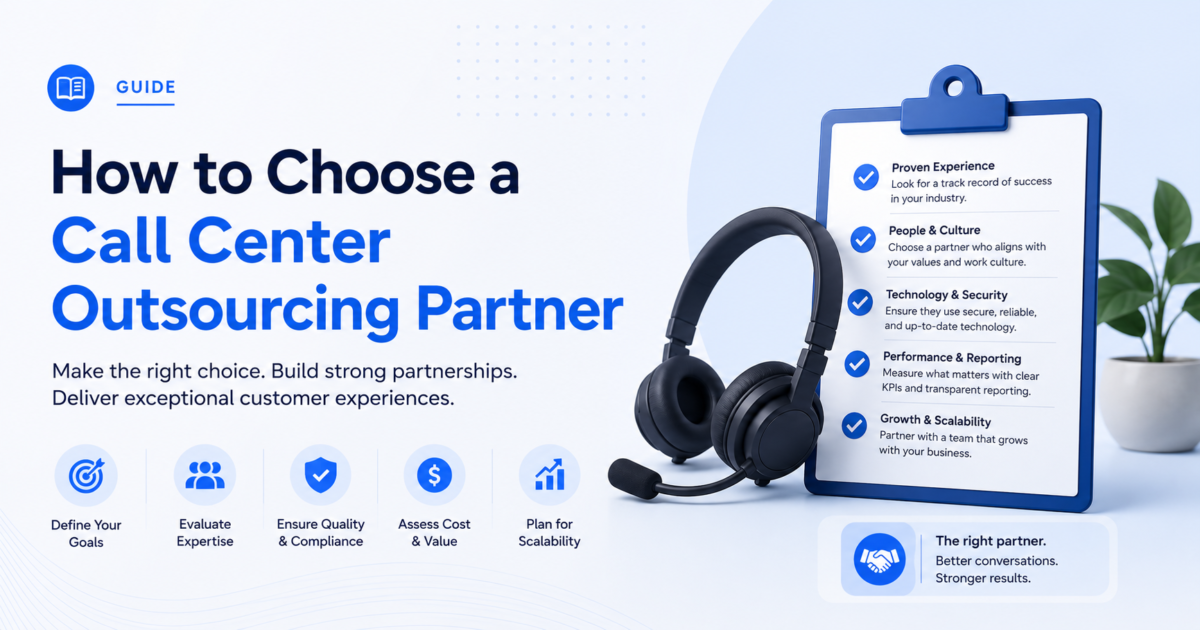
To choose the right call center outsourcing partner in 2026, evaluate providers against twelve criteria: industry expertise, security and compliance certifications, AI readiness, scalability, pricing transparency, SLAs, quality assurance, omnichannel capability, technology stack, agent training and retention, geographic and language coverage, and proven reputation. The best partner is rarely the cheapest — it is the one that matches your industry, protects your customer data, scales with your demand, and can prove its results with references and metrics. This guide gives you a complete checklist, a weighted scorecard, the exact questions to ask, and the red flags to avoid before you sign.
Key Takeaways
- The cheapest provider is rarely the best value. Evaluate cost per resolved contact, not just hourly or per-seat rates.
- Security and compliance are non-negotiable in 2026. Demand evidence of ISO 27001, SOC 2, PCI DSS, GDPR, or HIPAA, depending on your industry.
- AI readiness is now a core differentiator, not a buzzword. Ask for proof of live AI use cases, not slideware.
- Scalability and agent retention matter more than raw size. A partner that can hire, train, and retain quality agents quickly will outperform a larger one with high turnover.
- Always run a paid pilot before signing a long-term contract. A two-to-four-week trial reveals more than any sales presentation.
What Is a Call Center Outsourcing Partner?
A call center outsourcing partner is a specialized third-party provider (also called a BPO, or business process outsourcer) that handles inbound and outbound customer interactions on your behalf — including customer support, technical help desk, telemarketing, lead generation, order management, and after-hours coverage. Instead of recruiting, training, and managing an in-house team, you contract trained agents who represent your brand across voice, email, live chat, and social channels.
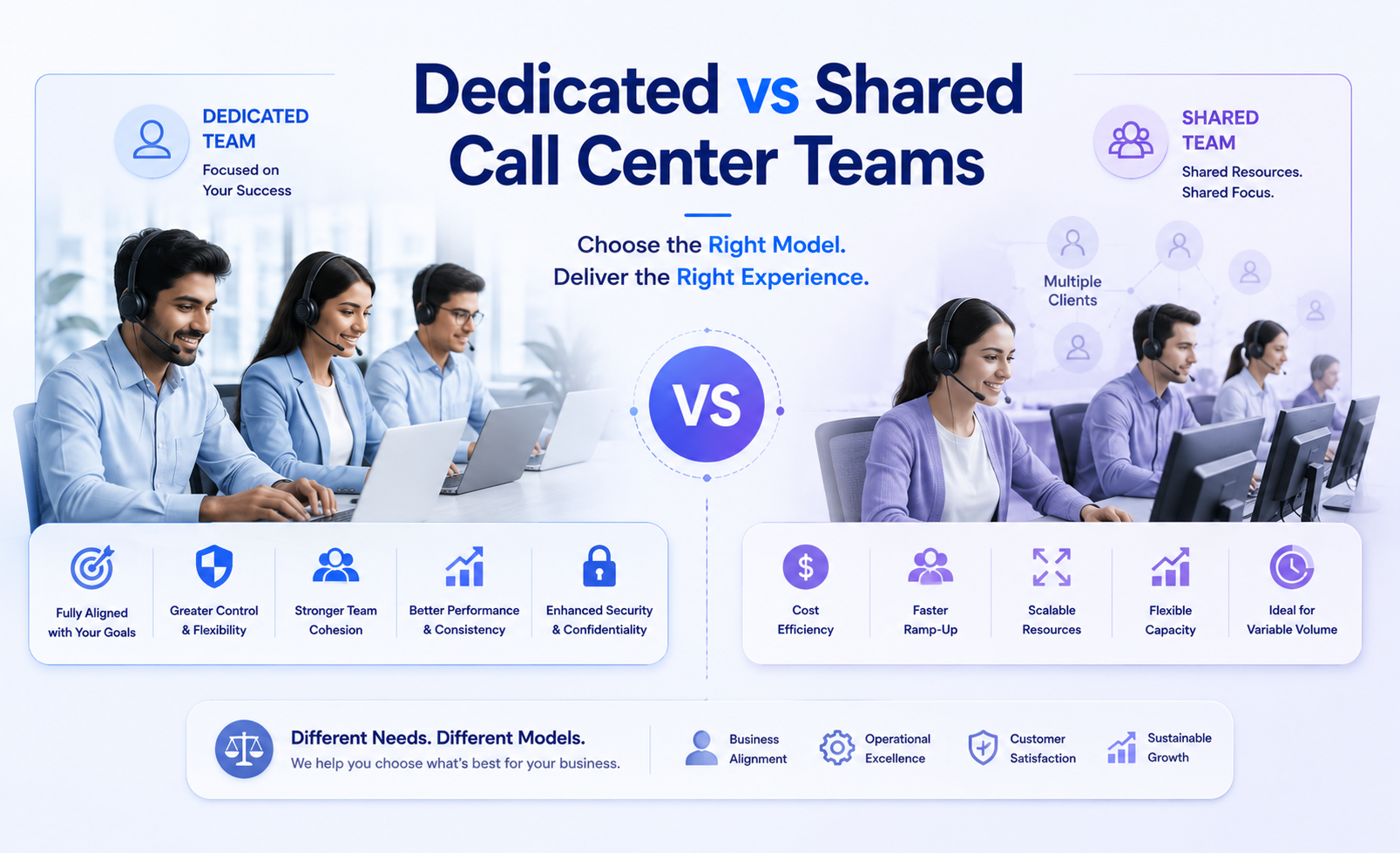
Outsourcing partners typically operate under one of three delivery models — onshore (same country), nearshore (a nearby country), or offshore (a distant, lower-cost region such as India or the Philippines) — and bill through per-hour, per-seat, per-contact, or hybrid pricing structures.
Why Choosing the Right Partner Matters in 2026
Your outsourcing partner becomes a direct extension of your brand. Every call answered, every ticket resolved, and every piece of customer data handled reflects on you — which is why a mismatched partner can quietly erode customer trust long before the damage shows up in your metrics.
The stakes are higher in 2026 for two reasons. First, customer expectations have risen: buyers now expect fast, consistent, around-the-clock service across every channel. Second, the technology and compliance bar has moved. AI has shifted from experiment to standard practice — according to Deloitte’s 2024 Global Outsourcing Survey, 83% of executives are now leveraging AI as part of their outsourced services. A partner that cannot demonstrate AI maturity, strong data security, and measurable performance is no longer competitive.
The good news: a structured evaluation removes the guesswork. The checklist below covers everything that separates a reliable long-term partner from an expensive mistake.
The 12-Point Checklist for Choosing a Call Center Outsourcing Partner
1. Does the partner have proven expertise in your industry?
Industry experience is the single biggest predictor of how fast a partner delivers value. Agents who already understand your sector resolve issues faster, follow the right compliance rules, and need less training to sound like your brand. A healthcare client needs HIPAA-aware agents; a fintech client needs agents fluent in KYC and dispute handling; an e-commerce brand needs agents who know order tracking and returns inside out.
Don’t accept claims of expertise at face value. Ask for case studies from companies similar to yours, request client references you can actually contact, and ask how many agents on your account will have prior experience in your vertical.
2. Can the partner prove its security and compliance certifications?
Security is where you should be least willing to compromise. When you hand customer data to a third party, you are extending your own risk surface, so the provider’s safeguards effectively become yours.
Look for these baseline certifications and adjust by industry:
| Certification / Standard | What it covers | When you need it |
| ISO/IEC 27001 | Information security management | All providers (baseline) |
| SOC 2 Type II | Security, availability, confidentiality controls | SaaS, fintech, data-sensitive work |
| PCI DSS | Payment card data handling | Any process touching card payments |
| GDPR / CCPA | Personal data privacy | EU or California customers |
| HIPAA | Protected health information | Healthcare and health-adjacent work |
Beyond the certificates themselves, ask about end-to-end encryption, data residency, access controls, and their business continuity and disaster recovery plan. A transparent partner welcomes this scrutiny; evasiveness is a warning sign.
3. How AI-ready is the partner — and can they prove it?
AI readiness has become a genuine differentiator, but “we use AI” means nothing without evidence. The strongest partners deploy AI for ticket routing, sentiment analysis, real-time agent assist, and automated quality monitoring — while keeping human agents on complex, empathy-driven interactions.
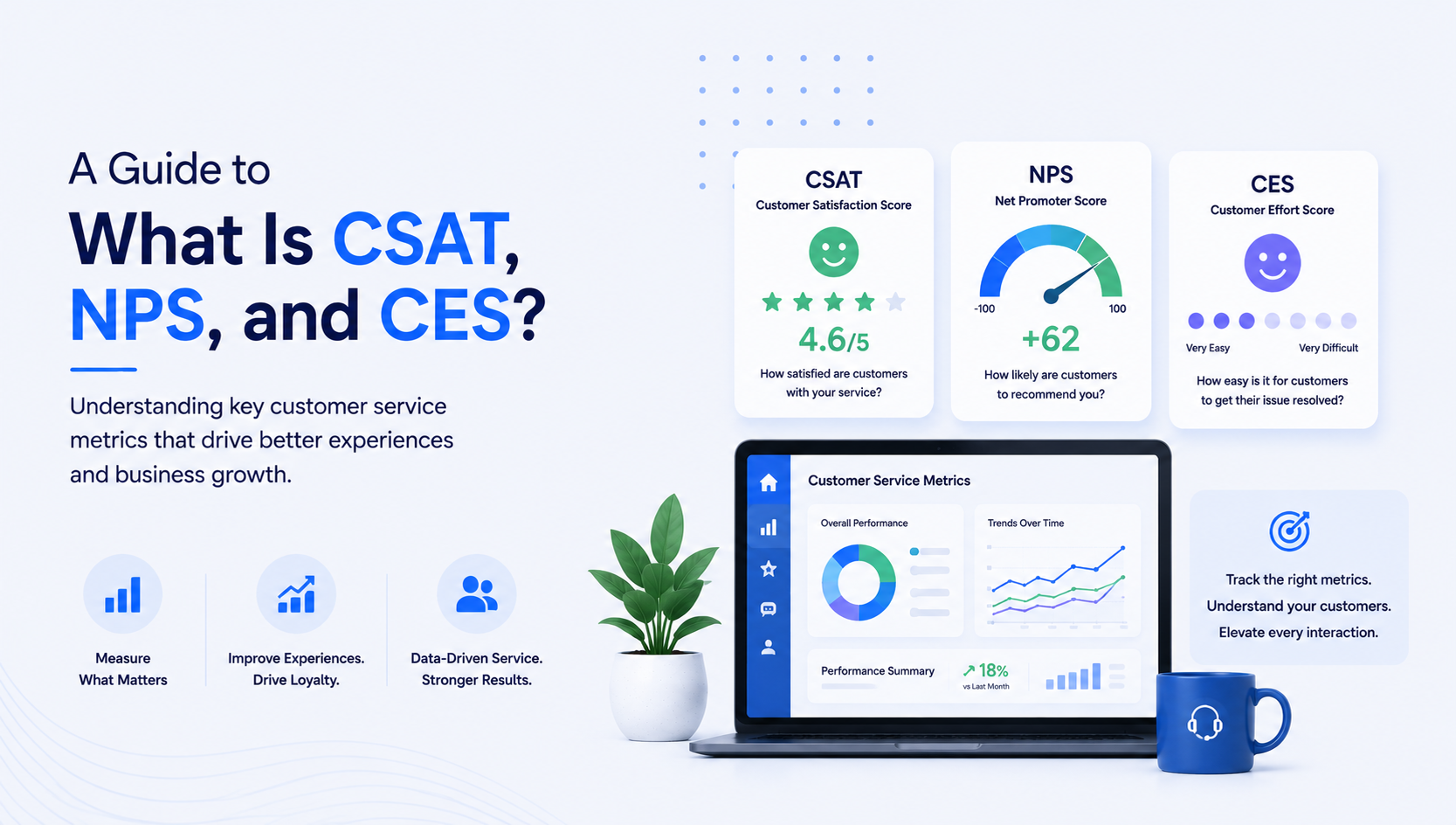
Ask for proof, not promises: request live (production) examples of AI in use, the measurable impact it delivered (faster response times, lower cost per contact, higher CSAT), and how their AI integrates with your existing CRM and helpdesk. The goal is optimal automation, not maximum automation — routine queries handled by AI, hard problems escalated to skilled humans. (For context on the tools that matter, see our guide to the AI tools every call center should be using.)
4. Can the partner scale up — and down — with your demand?
Your provider should be able to expand quickly during peak seasons or product launches and contract during slow periods, without quality slipping. A partner that can’t add trained agents fast enough will leave your customers waiting; one that overpromises a 70-person ramp in a month to win the deal will fail to deliver it.
Ask about hiring velocity (how fast they recruit, train, and deploy), whether scaling happens in realistic stages, and — critically — their agent retention rate. High turnover signals deeper organizational problems that will surface as inconsistent service. Bigger is not automatically better; mid-sized partners often give growing businesses more personalized attention than the largest global players.
5. Is the pricing model transparent, with no hidden costs?
Transparent pricing prevents budget surprises. Understand exactly what you are paying for, and where costs can change. The common structures each carry trade-offs:
| Pricing model | How it works | Best for |
| Per-hour | Pay for agent time | Steady, predictable volumes |
| Per-seat / dedicated | Fixed monthly fee per agent | Long-term, full-time teams |
| Per-contact / per-ticket | Pay per interaction handled | Variable or seasonal volume |
| Hybrid | Fixed base plus variable component | Mixed or scaling operations |
Probe for hidden costs: is training included? Technology licensing? Are there minimum-volume commitments or early-termination penalties? Compare at least three providers using an identical scenario, and judge them on cost per resolved contact rather than headline hourly rate. For a fuller breakdown, see our guide on the cost to outsource call center services.
6. Are SLAs and performance guarantees clearly defined?
A service level agreement (SLA) is the contractual backbone of the relationship — it defines the performance standards your partner is held to and the consequences if they miss them. Without clear SLAs, you have no enforceable definition of “good service.”
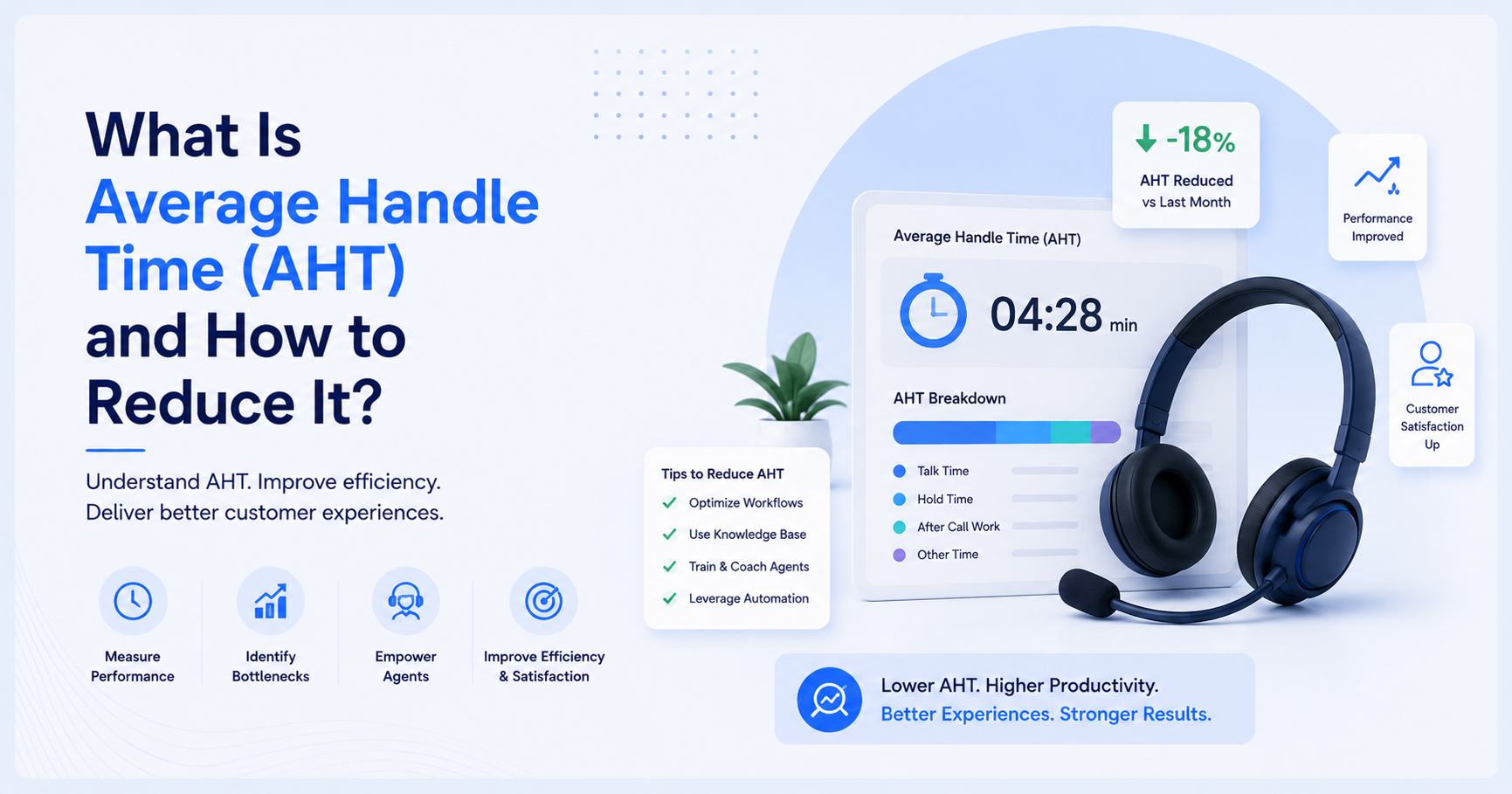
Make sure your contract specifies measurable targets such as average speed of answer, first-call resolution rate, abandonment rate, CSAT thresholds, and uptime — plus the remedies (credits or penalties) that apply if targets are missed. Confirm the SLA guarantees quality won’t drop during rapid scaling. Our explainer on SLAs in call centers covers exactly which metrics to lock down.
7. How does the partner monitor and assure quality?
Quality assurance is what separates good intentions from consistent results. Strong partners run multi-layered QA: they record interactions, audit a meaningful sample per agent, analyze customer feedback, and — crucially — act on what they find through coaching.
Ask to see their QA scorecard so you know what they measure (greeting, accuracy, resolution effectiveness, empathy, brand adherence), how many interactions they review per agent, and their remediation process when scores slip. Learn more in our guide to call center quality assurance.
8. Does the partner deliver true omnichannel support?
Modern customers don’t think in channels — they expect one continuous conversation whether they start on chat, switch to email, and finish on a phone call. Omnichannel support means a single, unified customer view so agents pick up full context instantly, with no repetition and no lost details.
Being “present” on multiple channels is not the same as connecting them. Evaluate each channel’s strength separately — strong phone support doesn’t guarantee strong social or chat support — and ask how they keep context and quality consistent across all of them. (See whether your priority is voice or chat support before you decide.)
9. Does the partner’s technology stack integrate with yours?
Your outsourcing partner’s tools have to work with your systems. Poor integration creates data silos, slow handoffs, and a fractured customer view. The right partner either runs proven proprietary platforms or has hands-on experience with the industry-standard CRM, helpdesk, and QA tools you already use (such as Zendesk, Salesforce, or Freshdesk).
Ask specifically about CRM and helpdesk integration, IVR and ACD capabilities, reporting and analytics access, and whether you’ll get real-time visibility into your own performance data.
10. How does the partner train, support, and retain its agents?
Agents are the people who actually represent your brand, so how a provider hires, trains, and keeps them directly determines your customer experience. Strong partners invest weeks in onboarding — product deep-dives, brand immersion, communication coaching, and system training — before agents handle a live customer, and they maintain structured knowledge bases so answers stay consistent.
Agent retention is a leading indicator worth weighting heavily. Happy, well-supported agents build better rapport and make fewer errors; chronic turnover guarantees inconsistent service no matter how good the sales pitch was. Ask about training duration, average agent tenure, and how they motivate agents for quality rather than just call volume.
11. Does the geography, time zone, and language coverage fit your customers?
Where your partner operates affects cost, overlap with your working hours, language coverage, and accent familiarity. Offshore providers (such as those in India) offer the strongest cost advantage and deep talent pools; nearshore providers offer closer time-zone alignment; onshore providers offer maximum cultural proximity at the highest cost.
Match this to your customers, not just your budget. If you serve global customers, multilingual and 24/7 coverage may matter more than location. Read more on the role of multilingual support in global outsourced call centers.
12. Can the partner prove its reputation and stability?
Finally, verify that the partner is reputable and financially stable enough to be a long-term extension of your business. A provider that folds or under-invests mid-contract is a serious operational risk.
Check independent review platforms (such as Clutch and G2), employee reviews (high staff churn often signals cultural problems), client testimonials, case studies, industry awards, and how long they’ve operated. Octopus Tech, for example, has delivered outsourcing services since 2011 across multiple Indian delivery centers — operating history and references are exactly the kind of proof you should ask any shortlisted partner to provide.
15 Questions to Ask Before You Sign
- Which clients in our industry have you supported, and can we speak to two references?
- Which security certifications do you hold, and when were they last audited?
- How do you handle and store our customers’ personal and payment data?
- Can you show a live example of AI used in your operations and its measurable impact?
- What is your agent retention rate and average tenure?
- How quickly can you recruit, train, and deploy new agents at scale?
- What exactly is included in your price, and what triggers additional costs?
- What SLAs do you commit to, and what happens if you miss them?
- How many interactions do you review per agent, and what’s on your QA scorecard?
- How do you maintain a unified customer view across channels?
- Which CRM and helpdesk tools do you integrate with, and how?
- What does your agent onboarding and training program look like?
- Will we have a dedicated account or service delivery manager?
- What reporting and real-time data access will we receive?
- Can we run a paid pilot before committing to a long-term contract?
Red Flags to Watch For
- Vague answers on security. Reluctance to share certifications or data-handling details is a serious warning sign.
- Pricing that looks too cheap. Unusually low rates often hide quality shortcuts, hidden fees, or high agent turnover.
- Overpromising on scale. A partner that guarantees aggressive ramp-ups with no mention of stages or risks is setting you up to be let down.
- No measurable SLAs. If they won’t commit to numbers, they can’t be held accountable.
- High agent turnover. Chronic churn means inconsistent service no matter how strong the pitch.
- No references or case studies. A credible partner can always point to comparable clients.
- “AI” with no evidence. Buzzwords without live use cases and metrics signal marketing, not capability.
How to Run the Selection Process: Step by Step
1. Define your requirements. Document your goals, volumes, channels, budget, compliance needs, and the metrics that define success. You can’t evaluate partners without a clear picture of what you need.
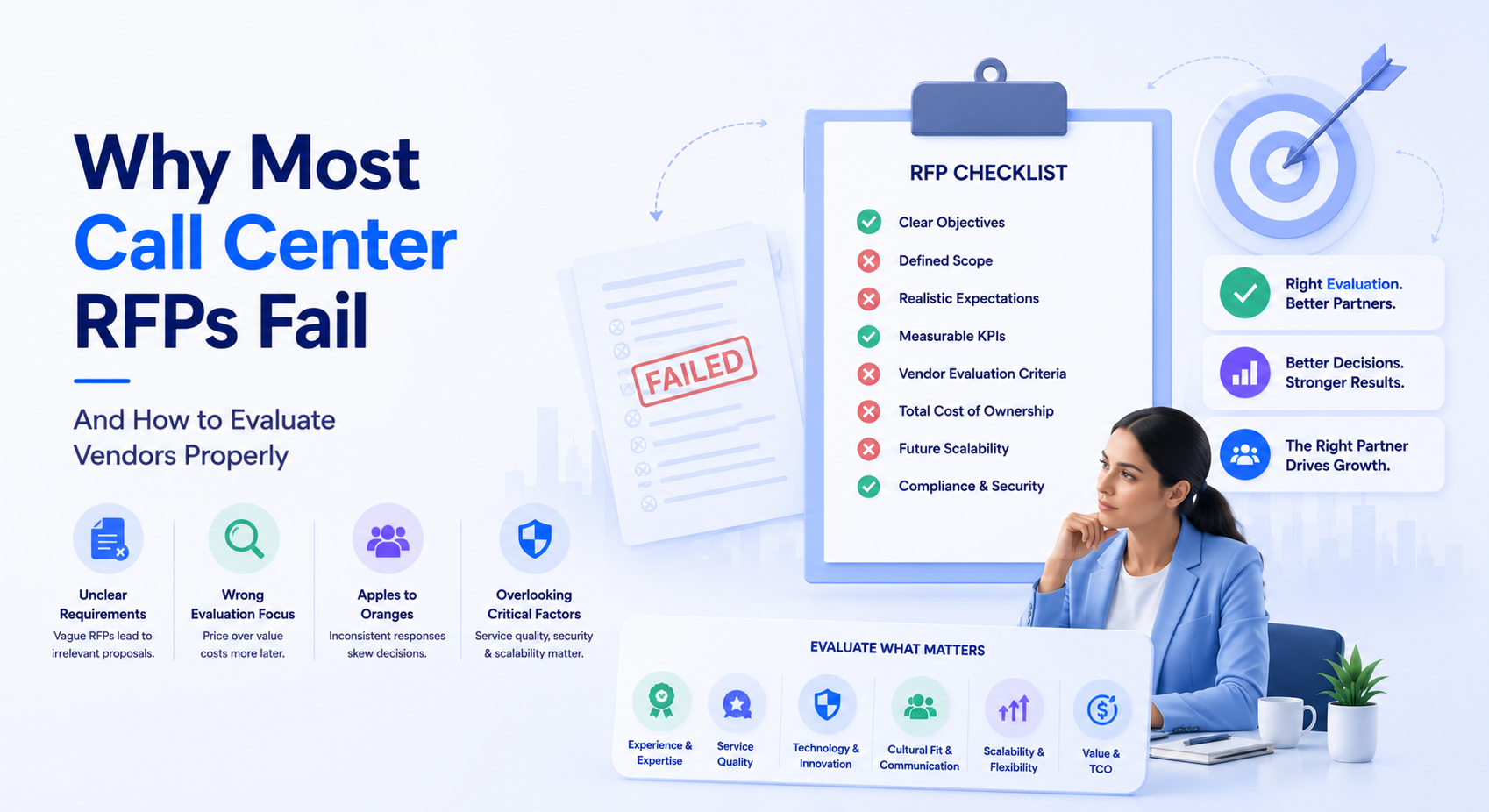
2. Shortlist three to five providers. Use review platforms, references, and the 12-point checklist to narrow the field. Don’t evaluate more than five seriously — it dilutes your attention.
3. Issue an RFP and compare like-for-like. Give each shortlisted provider the same scenario so their proposals are genuinely comparable. Score them with the weighted scorecard above.
4. Run a paid pilot. Before signing anything long-term, test your top choice with a small, time-boxed pilot (typically two to four weeks). This reveals real performance — quality, communication, responsiveness — far better than any presentation.
5. Negotiate the contract and SLAs. Lock in measurable SLAs, pricing terms, scaling guarantees, data-protection clauses, and exit terms. Clarity here prevents disputes later.
6. Plan onboarding and governance. Agree on training, knowledge transfer, reporting cadence, escalation paths, and who owns the relationship on both sides.
Frequently Asked Questions
What should I look for in a call center outsourcing partner? Look for proven experience in your industry, strong security and compliance certifications, demonstrable AI readiness, the ability to scale with your demand, transparent pricing, clear SLAs, robust quality assurance, true omnichannel capability, technology that integrates with your systems, low agent turnover, suitable geography and language coverage, and a verifiable track record.
How much does it cost to outsource a call center? Costs vary widely by location, service type, and complexity, and are billed per hour, per seat, per contact, or via hybrid models. Offshore destinations such as India offer the lowest rates. Focus on cost per resolved contact rather than the headline rate — the cheapest option rarely delivers the best value. See our guide to call center outsourcing costs for detail.
What questions should I ask before hiring a call center? At minimum, ask about industry references, security certifications, data handling, AI use cases, agent retention, ramp-up speed, what’s included in the price, committed SLAs, QA process, integrations, training, and whether you can run a pilot first. The 15 questions listed above cover the essentials.
Should I choose an onshore, nearshore, or offshore call center? Choose based on your priorities. Offshore (e.g., India) offers the best cost savings and large talent pools; nearshore offers closer time-zone alignment; onshore offers maximum cultural and linguistic proximity at the highest cost. Many global businesses blend models to balance cost and coverage.
What certifications should a call center outsourcing company have? ISO 27001 is a baseline for information security. Add SOC 2 for data-sensitive work, PCI DSS for payment handling, GDPR/CCPA compliance for personal data, and HIPAA for healthcare. Always confirm certifications are current and independently audited.
How long does it take to onboard an outsourced call center? It depends on complexity, but expect a few weeks for training and knowledge transfer before agents handle live interactions, followed by a ramp-up period. A short paid pilot beforehand helps validate fit and smooth the transition.
Why is agent retention important when choosing a partner? High agent turnover leads to inconsistent service, repeated training costs, and lost product knowledge. A partner with strong retention delivers more consistent quality and better customer relationships, which makes retention rate one of the most revealing metrics to ask about.
Should I sign a long-term contract immediately? No. Run a paid pilot of two to four weeks first. It exposes real-world performance — quality, responsiveness, and communication — that no sales pitch can, and it dramatically lowers the risk of committing to the wrong partner.
Choosing Your Partner with Confidence
Selecting a call center outsourcing partner is one of the most consequential operational decisions you’ll make — the right choice compounds in value over years, while the wrong one drains budget and erodes customer trust. Work through the 12-point checklist, score your shortlist objectively, ask the hard questions, watch for the red flags, and always pilot before you commit.
Octopus Tech has provided voice and non-voice call center outsourcing from India since 2011, with multiple delivery centers, multilingual coverage, and experience across e-commerce, fintech, telecom, healthcare, and more. If you’re evaluating partners, get in touch for a no-obligation conversation about your requirements — or explore 12 reasons to choose call center outsourcing to build your business case.