Optimizing Your Magento Store: A Guide to Superior Content Strategy

Magento is one of the go-to options for eCommerce stores, as it is the 3rd most popular eCommerce platform after Shopify or WooCommerce. It provides many tools and convenient plugins that make it easy to create and manage an eCommerce store.
That’s why Magento handles around $155 billion in sales every year through eCommerce stores, and it’s growing 33% every year. But, how do you make the most of it by improving your content strategy? How does an ai paraphraser fit into all this? Besides, what are some of the best practices?
We’ll identify those and also talk about some of the key strategies that can provide better visibility to content on your Magento store. So, let’s get started.
What is Magento?
Magento is one of the leading eCommerce platforms today, which has become widespread for its open-source nature and flexibility. It’s also quite scalable, as both large and small businesses use it frequently to create and optimize their stores online.
It has a variety of built-in features that make it easy to create and handle an eCommerce store. These features are ideal for both, the customer and the store side, and some of these key features of a Magento store include:
- Flexible product catalog for both the user and store owner;
- Advanced and easy inventory management;
- Convenient in-built marketing and promotional tools;
- Secure payment gateways for superior safety;
- Customizable themes and templates for personalization;
- Mobile-responsive design;
- And extensive third-party integrations.
Besides that, the built-in elements of Magento make it an ideal platform for SEO purposes, as it also provides the means to tackle technical SEO challenges a store might face.
Best Technical Practices for a Magento Store
There are quite a few best practices to keep a Magento store higher in search engine ranks, and not just related to content, but also technical aspects. While we’ll talk about content in a bit, it’s important to employ technical SEO practices to maintain a Magento store.
Some of the said best practices include:
- Keep the Magento store updated;
- Improve website speed by enabling caching;
- Use XML-based sitemaps;
- Implement structured data markup;
- Implement SSL Security
- And monitor/improve the crawlability of the website.
These practices will get your website noticed by Google and help it stand out in search engines.
4 Content Strategies & Tips to Optimize Your Magento Store
Now let’s talk about 4 content strategies and tips that can help you optimize your Magento store for better online visibility.
1: Ensure Indexing Of Your Site
One of the first things that you need to do is ensure your website is indexed and ensures your store’s visibility on search engines. Now, once you have updated the Magento store, it’s likely that the store will update these settings itself.
If not, you can simply do that manually, but first, you need to check whether or not your website is indexed by Google. Simply search this on Google:
“Site:websitename.com”
So, once you search for a website like that, it might show up like this:
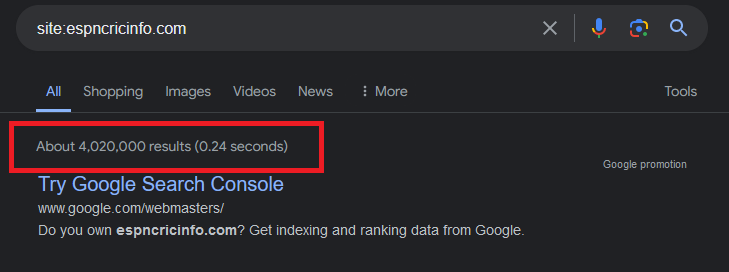
Now, the next part is to go to Google Search Console and then find these settings:
“Google Search Console > Index > Coverage”
If the number of valid pages is 0, or not too many, then you need to up that number by indexing your website.
2: Optimize Meta Data For SEO
The next thing you need to do is make sure meta data is accurate and up to standards for SEO purposes. It’s important that you use the right metadata for your content to be noticed by search engine crawlers. This metadata includes:
- Meta title;
- URL key/slug;
- Meta keywords;
- And meta description.
You need to ensure all of these are of the highest quality, but you also need to ensure the meta description is different from the main content—though it needs to embody the main content. And, one way to fix that is by restating it using an AI paraphraser.
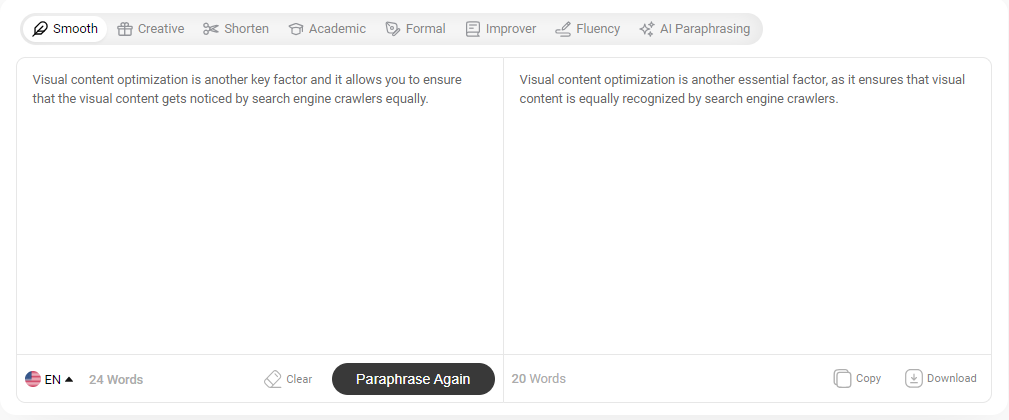
Doing this will help save a ton of time, and also allow you to paraphrase plenty of meta descriptions on your website within seconds/minutes. So, make sure you optimize your meta data thoroughly.
3: Visual Content Optimization
Visual content optimization is another key factor and it allows you to ensure that the visual content gets noticed by search engine crawlers equally. Naming your images and videos with proper meta tags and keywords can help them get noticed.
So, make sure you are using the right meta tags and keywords to optimize your visual content. Here’s how to do that properly:
- Make sure you add descriptive alt text and describe the images/videos properly;
- Add image titles with relevant keywords;
- Add brief yet descriptive captions for images and videos;
- Customize file names to match the meta tags.
This will ensure that search engine crawlers can identify this visual content on your website thoroughly, and index it in search engine ranks.
4: Remove Or Rephrase Plagiarized Content
Removing plagiarized or duplicated content is another important factor, and it can improve your Magento store’s online visibility. This is one of the key processes in optimizing the content for online audiences. So, you need to identify plagiarized content by using a plagiarism checker:
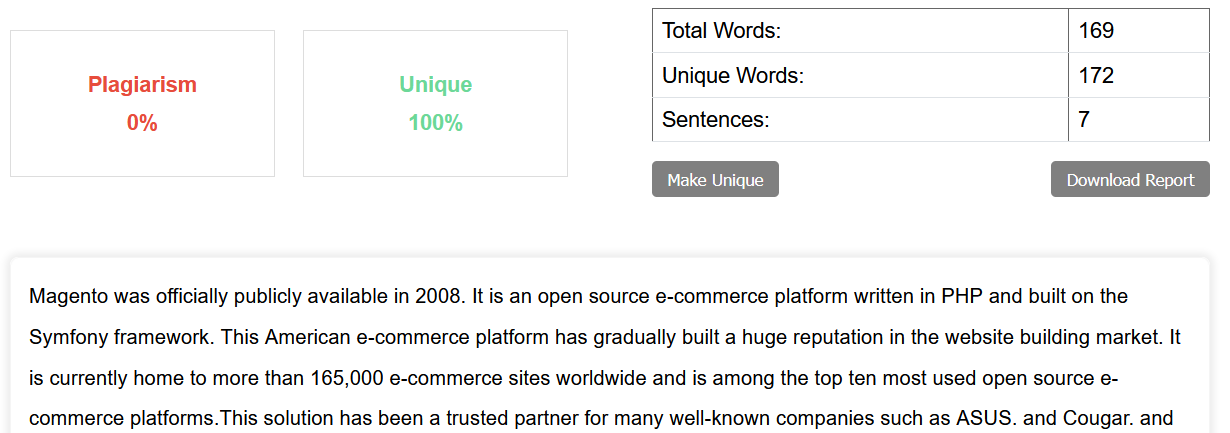
Then, you need to rephrase or redo this plagiarized content with a ai paraphraser to save ample time:
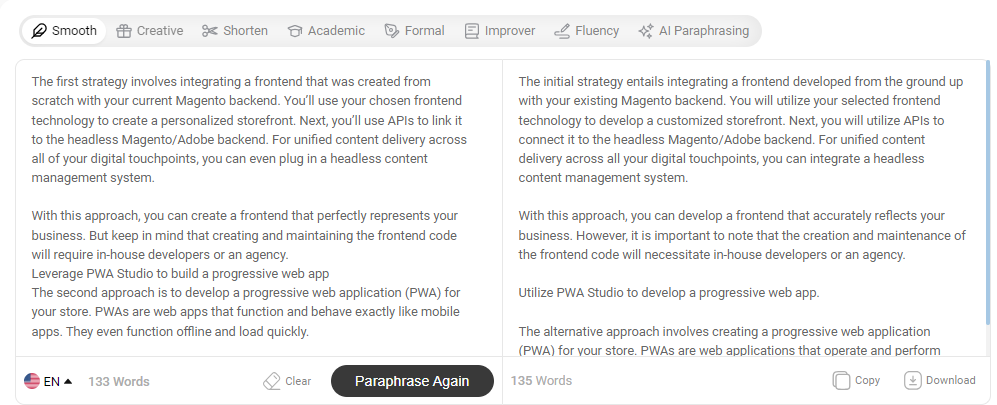
Once you rephrase the text, check for plagiarism again before posting:
Now that the plagiarism is removed from your content, go ahead and post it on your website or blog again. This should be a key practice every time you post something on your Magento store. This will help you guarantee that every text you post on your website is original and free of duplicity.
Conclusion
These are some of the best practices to improve content strategy, and technical prowess of your Magento store. By employing these techniques, you can improve the quality of content that’s featured on your website, but also remove the potential drawbacks of duplicate content. And, these tips can make it easier for search engine crawlers to find and index your website.